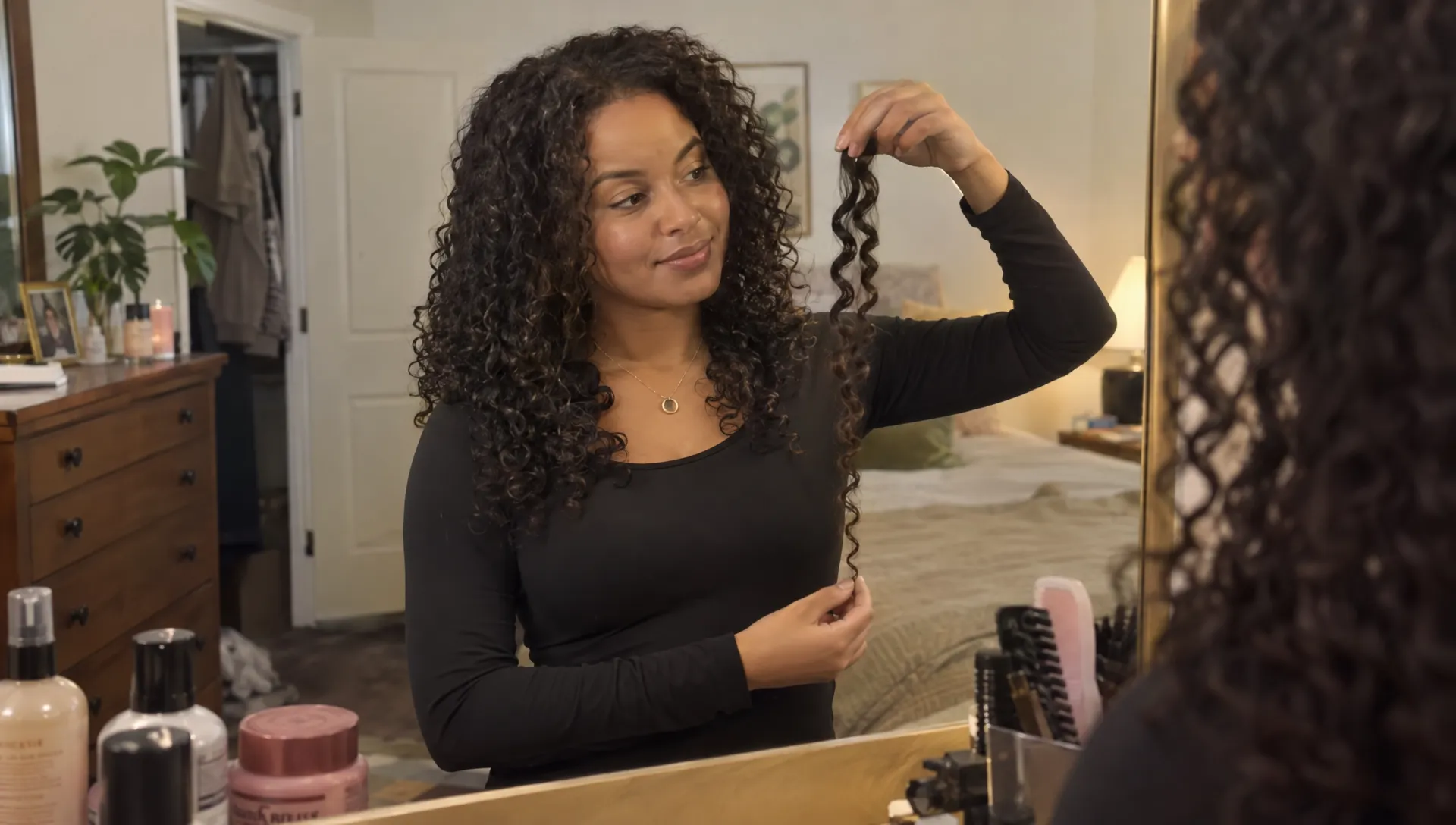
The most convincing curly tape in hair extensions blend with the hair you actually wear, not just the curl pattern shown in a product photo. That means matching how your curls shrink, separate and move after washing, then choosing a length and installation plan your natural hair can comfortably support.
A good result should not require you to straighten your roots or recurl every strand each morning. Before committing to a full installation, use the steps below to check the texture match, plan the shape and spot situations where another extension method may suit you better.
Start with your washed, fully dry curl pattern
Assess your natural hair in its usual curly state. Freshly stretched hair, an old twist-out or a heavy styling cream can give a misleading picture of your everyday texture.
Wash and style your hair with your normal routine, then let it dry completely. Look at the crown, sides and nape separately. Many people have several curl patterns, so the goal is a compatible overall blend rather than an identical match to every strand.
Curl labels such as 3A or 3C can help narrow a search, but they do not capture everything that affects the result.
| Feature | What to compare | Why it matters |
|---|---|---|
| Curl size | Loose bends, wider spirals or tight coils | Different curl sizes can create a visible texture change |
| Shrinkage | The difference between stretched and dry length | Similar listed lengths may finish at different points |
| Strand thickness | Fine, medium or coarse individual strands | Thick extension strands may stand out against delicate natural hair |
| Density | How much natural hair covers the scalp | Density affects bond coverage and suitable extension weight |
| Surface texture | Smooth definition, soft fluff or a mixture | Very glossy extensions may contrast with a softer natural finish |
When choosing curly tape in hair extensions, prioritize the features visible through your top and outer layers. Those are the areas that need to merge naturally with the added hair.
Wash a sample before committing to a full set
A showroom curl is not necessarily a wash-day curl. Extension hair may arrive with a carefully styled finish, and some curly textures are created through processing. Washing can reveal a looser pattern, different shrinkage or a change in softness.
Ask whether a sample or small test piece is available and whether washing it affects return eligibility. Follow the supplier’s care instructions, keeping any adhesive area protected as directed.
- Photograph the starting point: Capture your natural curls and the sample in similar lighting, without stretching either one.
- Use a realistic routine: Cleanse and condition the loose hair according to its instructions, then apply compatible styling products similar to those you normally use.
- Dry completely: Compare the sample with your hair only once both are fully dry. Damp curls can look more compatible than they ultimately are.
- Check the next-day result: Reassess after sleeping and refreshing. Notice whether one texture holds its shape while the other expands or drops.
A sample test helps you judge whether curly tape in hair extensions can fit your routine without constant corrective styling. If the match only works after curling every piece with a hot tool, keep looking.
Also ask whether the sample represents the texture and batch you would receive. Human hair and a “Remy” label do not, by themselves, guarantee a lasting curl match.
Choose length, shade and fullness together
Compare dry length, not just the number on the package
Confirm how the supplier measures length, since curly hair is often measured while stretched. Ask where the extensions are likely to fall when dry, and compare that with your natural hair’s finished length.
A dramatic jump from a short, dense cut to long extensions can leave an obvious shelf where your own ends stop. A more moderate length, shaped layers or a gradual length increase may create a better transition.
This is why curly tape in hair extensions should be selected with the finished haircut in mind. More inches will not fix a disconnected shape. The same principles a curly hair stylist uses to account for shrinkage and balance matter when planning an extension blend.
Match the visible color and weight
Compare shades in indirect daylight, especially through the mid-lengths and ends where your hair meets the extensions. A root match alone can still leave a noticeable color break below the shoulders.
For fullness, distinguish fine strands from low density. Fine hair can be dense, while thicker strands can be sparsely distributed. The stylist needs to assess both before deciding how much added hair is suitable. Buying extra packs is not a substitute for that assessment.
Check whether your hair and scalp can support tape-ins
Tape-ins use adhesive tabs to attach extension hair to sections of natural hair. They can work with curly textures, but suitability depends on scalp health, hair strength, coverage and maintenance habits.
Active breakage, unexplained shedding, scalp sores or significant thinning are reasons to pause. Curly tape in hair extensions should not be used to cover a problem that added weight or tension could aggravate. The American Academy of Dermatology explains that repeated pulling from hairstyles can cause traction alopecia.
If thinning has also led you to research microneedling devices at Dr. Pen Store, keep that decision separate from extension planning. A dermatologist should assess unexplained hair loss before you consider scalp procedures or added extension weight.
Low-density areas may not provide enough coverage to conceal tabs, even if the individual strands seem strong. Recent chemical processing also deserves a careful assessment rather than an automatic approval or rejection.
Tell your stylist about scalp sensitivity, previous adhesive reactions and any discomfort from past extensions. Installation should not hurt. Persistent pulling, burning or tenderness needs prompt attention, not a waiting period to “get used to” the hair.
Build the blend during a professional installation
A trained extension stylist should handle adhesive placement, section sizing, bond spacing and removal. These decisions affect both the appearance and the load placed on your natural hair.
The placement of curly tape in hair extensions should follow your usual parting and styling habits. Show the stylist how you wear your hair down, tuck it behind your ears and gather it back. A placement that disappears with a center part may become visible when you switch sides.
Tabs need adequate natural-hair coverage and enough freedom for comfortable movement. They should not be placed against the scalp or in fragile perimeter areas simply to fill a visible gap.
Once installed, the hair should be checked dry in its intended curly finish. A stylist can then assess the outline, identify bulky areas and soften the transition between your own ends and the extensions. Aggressive thinning can create wispy ends or frizz, so blending should be deliberate rather than an attempt to erase every difference.
Before leaving, check the back and sides with a mirror, move your head and try your everyday hairstyle. Ask the stylist to show you which areas need support during detangling and which updos the placement can accommodate.
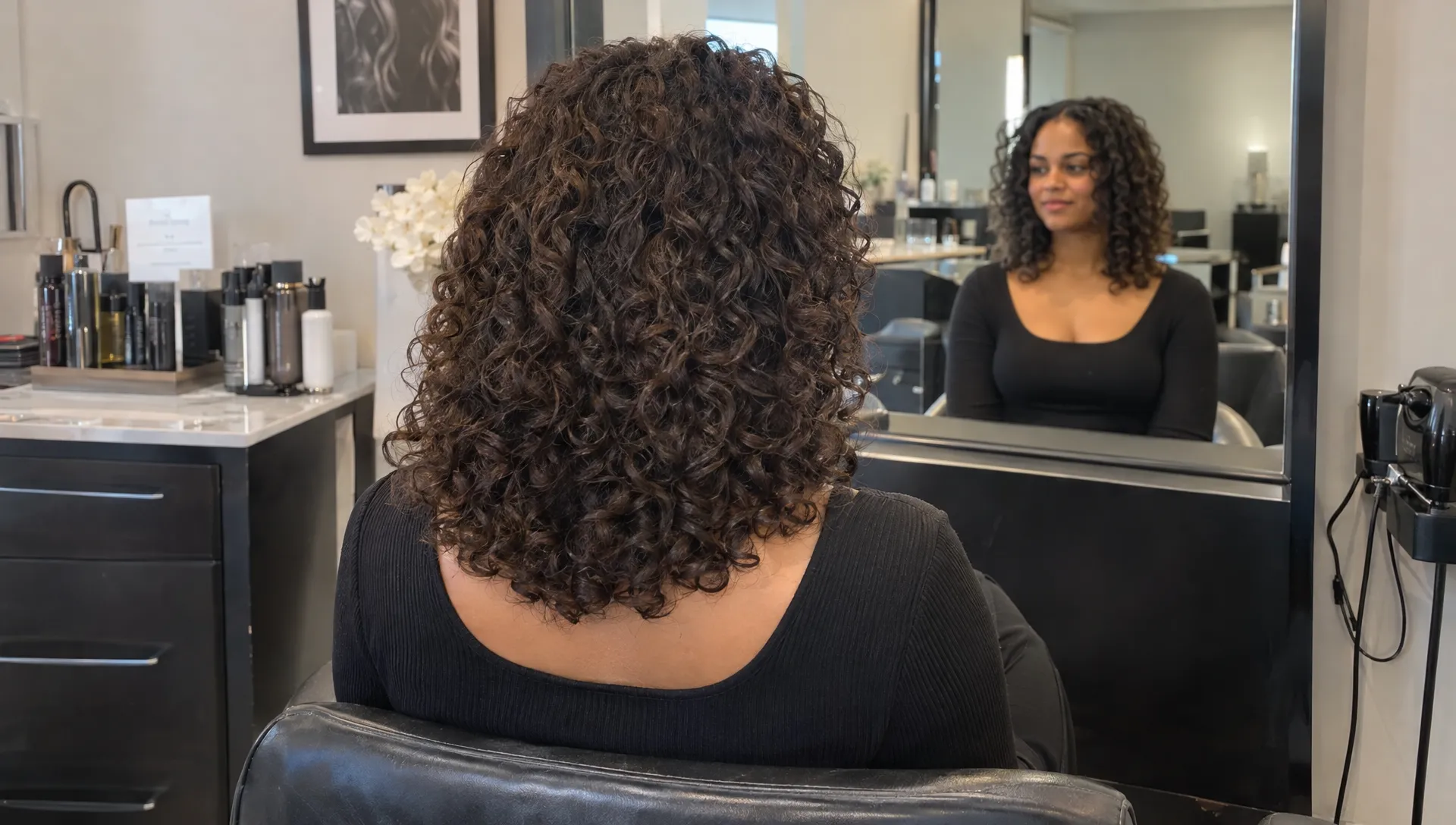
Style both textures as one finished shape
The easiest daily blend usually comes from a shared styling routine, not separate routines that produce different finishes.
Apply suitable curl products through the lengths while keeping oils, conditioner and styling buildup away from adhesive areas as instructed. Use enough water and product to distribute the curls evenly, but avoid saturating the bonds during every refresh.
Where your natural ends meet the added hair, gently encourage compatible curl groupings with your fingers. Do not pull tightly or twist sections in a way that transfers tension to the tabs. Some natural variation looks more believable than forcing every curl into the same spiral.
If curly tape in hair extensions look separate after styling, identify the mismatch before adding more product. A horizontal shelf usually needs a shape assessment; a different curl size suggests a texture problem; exposed tabs point to coverage or placement.
When diffusing, follow the extension supplier’s heat guidance and avoid concentrated heat directly on the adhesive. If air-drying, make sure the attachment areas dry thoroughly rather than leaving them damp beneath dense curls.
For overnight care, a loose arrangement with satin or silk can reduce friction. Avoid a tight pineapple or ponytail if it pulls on the attachment points.
Keep the match through wash days and move-ups
Aftercare should preserve the curl blend as well as the bonds. Follow your stylist’s initial washing instructions and the adhesive manufacturer’s guidance rather than assuming every tape system has the same waiting period.
On wash days, detangle in supported sections and avoid rough movement at the roots. Our guide to washing tape-in extensions without loosening the bonds explains the cleansing technique in more detail.
Over time, curly tape in hair extensions may respond differently from your growing natural hair. Take occasional dry-hair photos from the back to track changes in length, volume and the transition line. Bring those photos to maintenance appointments if the blend starts looking disconnected.
Book move-ups according to your stylist’s assessment of growth, shedding, tangling and bond condition, not a universal calendar. As attachments grow away from the scalp, they can become harder to conceal and manage.
Do not peel tabs apart or pull extensions out at home. Professional removal uses a compatible remover and controlled handling. Reuse depends on the condition of the hair and whether the curl pattern still meets your needs.
Consider another method if your routine needs more flexibility
Tape-ins are not automatically the best choice because the texture matches. Think about how often you want to remove the hair, change your part or wear a high ponytail.
| Method | Potential advantage | Main consideration |
|---|---|---|
| Curly clip-ins | Removable fullness for occasional wear | Clips still need secure coverage and should not pull on fragile hair |
| Tape-ins | Relatively flat attachments for ongoing wear | Adhesive care, placement and professional maintenance matter |
| Sew-in extensions | Another option for longer-term wear | The foundation must suit your density without excessive tension |
| Halo-style extensions | No adhesive attachment to individual strands | Short layers and some updos can make concealment difficult |
Choose curly tape in hair extensions when the method fits your hair and routine, not simply because they promise length. Someone who wants removable weekend volume has different needs from someone comfortable with ongoing salon maintenance.
Bring that distinction into the consultation before choosing a texture or ordering hair.
Frequently asked questions
Can tape-ins work with more than one natural curl pattern? Yes. A stylist may choose a texture that complements the most visible areas or combine compatible textures. Judge the result with your hair dry, since stretching everything can hide a mismatch.
Can you wear curly tape in hair extensions in a ponytail? Sometimes, depending on placement, coverage and ponytail height. Ask your stylist to test your preferred style before finalizing the installation. A low, loose ponytail may be easier to conceal than a high, tight one, but it should never pull painfully.
Will extensions damage fine curly hair? Damage is possible with any method that adds weight or tension. Fine hair requires an individualized assessment of strand strength, density and coverage. Too much hair, poor placement, delayed maintenance or rough removal can increase the risk.
Can you straighten curly extensions and wash the curls back in? Do not assume so. Heat tolerance and curl recovery depend on the fiber, processing and supplier’s instructions. Even human-hair extensions can lose their intended pattern after repeated heat styling.
Plan your curly tape in hair extensions consultation
Bring photos of your everyday curls, your preferred finished length and any sample hair you have tested. Include examples of how you wear your hair up, not just inspiration photos with the hair down.
At Kingdom Cute in Warner Robins, a personalized consultation is an opportunity to discuss your texture, hair health and extension goals. Ask which method suits your hair and what installation, blending and maintenance would involve before committing.

No comments:
Post a Comment