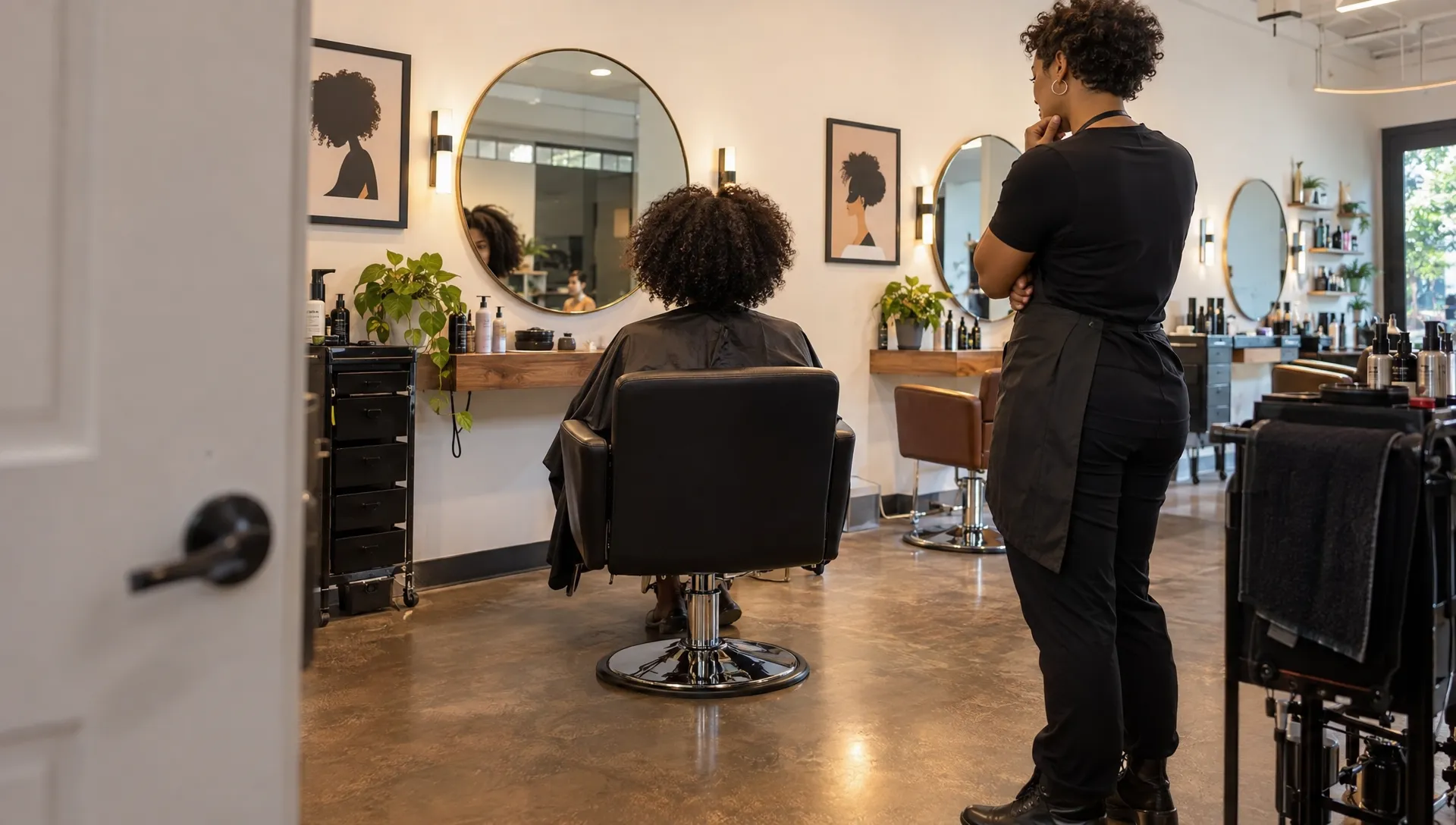
A hair salon for 4c hair should plan for how your coils sit when fully dry, not just how long they look when wet or stretched. Shrinkage changes the visible length, fullness and outline of a haircut. If a stylist overlooks it, a trim that seems modest in the chair can leave your finished style shorter or differently shaped than you expected.
The goal is not to eliminate shrinkage. It is to understand how your hair responds, then build that response into the consultation, cutting method and final check. Whether you usually wear a wash-and-go, twist-out, stretched afro or silk press matters just as much as your reference photo. A useful appointment starts by defining the result you want to live with after wash day, rather than judging the cut only in its longest state.
What a hair salon for 4c hair should assess first
Shrinkage is the difference between your hair’s extended length and the length it shows as the coils contract. Water, drying, styling products and manipulation can change that visible difference. There is no single percentage that a stylist should assume applies to every head of 4C hair.
The 4C label also does not describe everything needed for a haircut. Strand thickness, density, previous chemical services and breakage affect how hair behaves. Tightly coiled hair can have fine strands, and different areas of the same head can respond differently.
A useful assessment compares several zones rather than stretching one section and treating it as representative of the whole head.
| Area to assess | What the stylist should observe | Why it affects the cut |
|---|---|---|
| Front and hairline | Resting length, coil behavior and fragile areas | Guides fringe length and face framing |
| Crown | Density, lift and how coils settle | Helps plan height and overall balance |
| Sides | Differences in contraction and fullness | Helps avoid an unintentionally uneven outline |
| Nape | Coil behavior, existing length and breakage | Informs the lower shape and neckline |
Shrinkage alone is not evidence of damage or a complete measure of hair health. Scalp symptoms, breakage and changes in the hair need separate attention.
Turn “keep my length” into a clear agreement
Before cutting, a hair salon for 4c hair should translate your length goals into something both you and the stylist can see. “Just a trim” does not establish how much may be removed or where the finished hair should sit.
Discuss both the amount to be cut and the shortest acceptable appearance in your usual style. For face framing, for example, you might want the front to remain below your eyebrows when dry and unstretched. That is more useful than approving a length while the section is pulled toward your chin.
A photo of your own hair on a typical wash day can help, especially if you arrive with it stretched. Reference photos of other people can communicate shape, but they cannot predict how your coils will fall.
The stylist should explain where damaged ends may conflict with your preferred length. You can then agree on a conservative trim, a larger cut or a gradual plan, without being promised that damaged ends can be permanently repaired.
Kingdom Cute’s guide to what a hair salon consultation should include offers a broader framework for discussing service history, maintenance and expectations before work begins.
Match the cutting method to your everyday style
A hair salon for 4c hair should be able to explain why its cutting approach suits your routine. Neither “always cut dry” nor “always straighten first” accounts for every client’s needs.
Cutting in a natural, dry state
Working with dry coils can help a stylist see the shape you actually wear, including areas that sit higher or appear fuller. This can be useful when the main goal is an afro silhouette or balance in a regularly worn natural style.
But “dry” does not automatically mean representative. A fresh twist-out, an old wash-and-go and hair stretched by a bun can sit very differently. The stylist should establish how the hair was prepared and whether that state reflects your normal routine before using it as the cutting guide.
Cutting with the hair stretched
Stretching can make it easier to inspect ends and compare extended lengths. Depending on the service, that might involve gentle manual stretching, another low-tension method or a blow-dry.
Even tension matters. Pulling one section more firmly than another can distort the comparison. Equally, an even stretched perimeter does not guarantee an even-looking natural perimeter when different areas contract differently.
If you alternate between a silk press and natural styles, tell the stylist before cutting. A strongly sculpted natural shape may look different when straightened, while a straight-looking perimeter may not create your preferred coily outline. The appointment should address that trade-off rather than discover it at the finish.
Check the shape after the coils settle
A hair salon for 4c hair should check the result in the state the appointment is intended to serve. For a natural-style haircut, the stretched-length check should not be the only assessment of the finished shape.
Where the service includes washing and natural styling, the hair should be fully dry before judging its final outline. Damp roots or sections that have not settled can make the shape appear longer or heavier than it will later.
The stylist can then look at the front, sides and back without continually pulling the hair downward. This reveals whether the silhouette is balanced and whether face-framing pieces sit where agreed.
A small adjustment may be appropriate, but repeatedly snipping individual coils to chase perfect symmetry can remove unnecessary length. Coils move, separate and regroup. The aim is a balanced, wearable shape, not identical placement of every strand.
If your appointment ends with a stretched style, ask how the natural shape will be evaluated. That may require a different service plan or a later check. The limitation should be explained before cutting, not after you discover it at home.
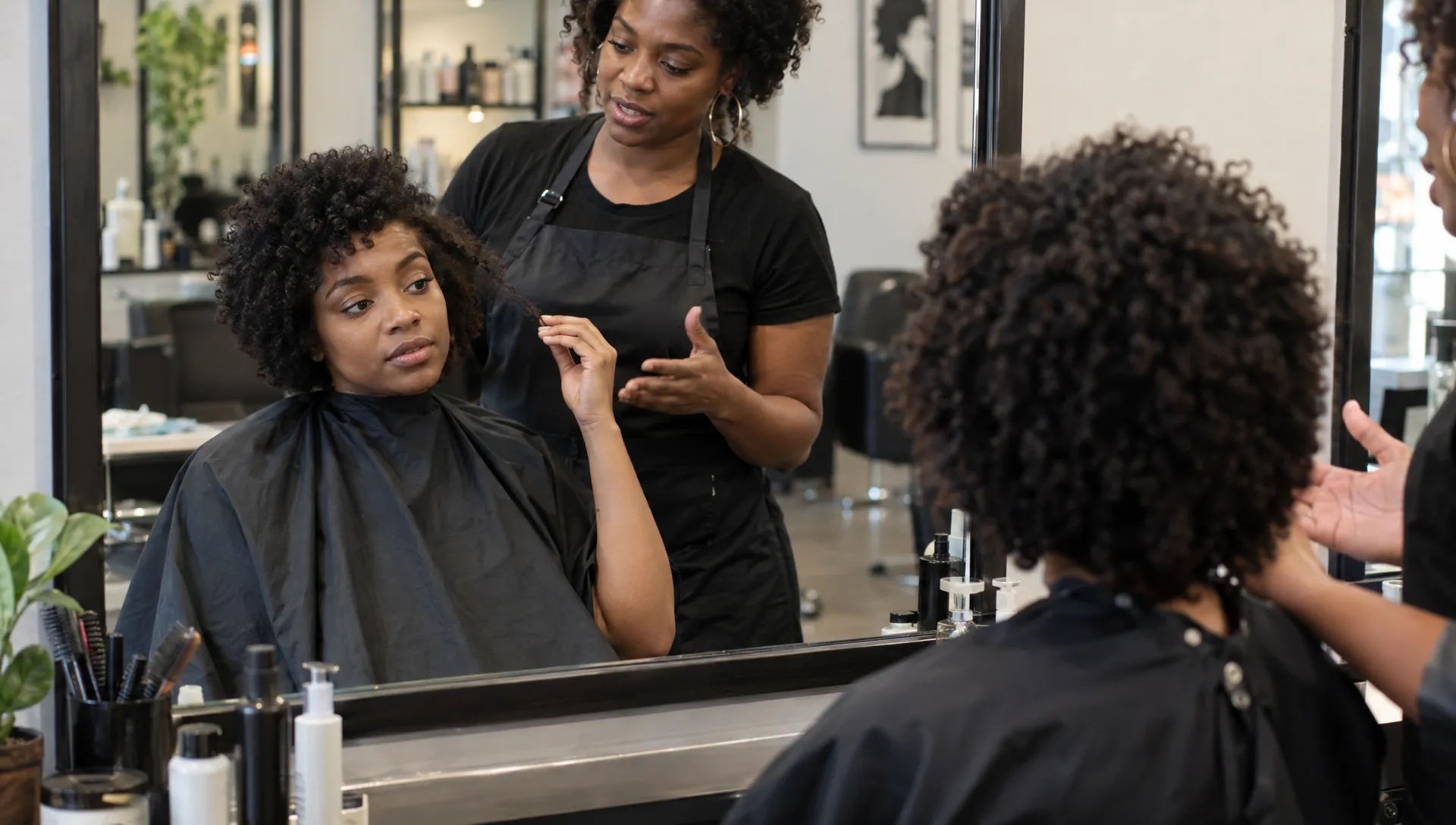
Account for shrinkage during styling, not just cutting
The finish can temporarily conceal or exaggerate the effect of a cut. Strong tension may make the hair appear longer, while a different product combination may change how sections clump and settle. Neither should be mistaken for a permanent change in shrinkage.
Agree on how much stretching you actually want
Some clients want a compact, rounded shape. Others prefer more visible length through banding, twists or a blowout. Neither preference is more correct, but the maintenance requirements differ.
Tell your stylist how much time you realistically spend on wash day. A shape that looks right only after extensive stretching may not suit someone who normally washes, styles and air-dries. Protective styles also temporarily change how the hair is arranged; they do not establish how the loose haircut will sit afterward.
Keep heat and handling proportionate
A hair salon for 4c hair should not rely on repeated high heat simply to make shrinkage disappear. If heat is part of the agreed service, discuss your chemical history, previous heat damage and how often you straighten at home.
The American Academy of Dermatology’s guidance on preventing hair damage recommends limiting excessive heat and using gentler handling practices. Detangling should also be careful rather than rushed, particularly where strands knot or catch.
For maintenance beyond the appointment, these healthy hair habits your stylist wishes you knew cover the broader care routine that supports length retention.
Ask these questions before the scissors come out
You do not need to prescribe a cutting technique yourself. You do need a clear explanation of how the stylist will connect your starting point to your preferred result.
These questions keep the conversation specific:
- “How should I arrive?” Ask whether the stylist wants your usual natural style, detangled hair or another preparation, and follow the salon’s instructions.
- “Where does my hair contract differently?” Ask the stylist to show you the areas that will influence the shape.
- “What length are we agreeing to?” Confirm both the amount being removed and the intended appearance when styled as usual.
- “How will we check the result?” Establish whether the appointment includes assessing the dry natural shape or only a stretched finish.
A useful answer explains the process and its limits. Promising an exact dry length based on a quick pull of one coil is less helpful than showing how several sections behave and agreeing on a conservative starting point.
Frequently asked questions
Should a hair salon for 4c hair always cut it dry? No. Dry cutting can help assess a natural silhouette, while a stretched approach may help with inspecting ends or planning for straight styles. The method should fit your hair’s condition and the way you wear it, with an appropriate final shape check.
Does more shrinkage mean my hair is healthier? Not necessarily. Shrinkage reflects coil behavior, but it is not a complete health assessment. Breakage, scalp condition, chemical history and changes in how your hair behaves also matter.
Can a haircut stop shrinkage? A haircut cannot permanently stop coils from contracting. It can change the weight and shape of the hair, which may affect how it sits. Styling can temporarily increase visible length, but the result can change with washing or humidity.
What if my haircut looks uneven after the first wash? Contact the salon before trimming it yourself. Explain how you washed, dried and styled it, and share clear photos. A different styling state, incomplete drying or an actual cutting imbalance may be involved, so the cause needs checking before more length is removed.
Plan your appointment around your natural result
When choosing a hair salon for 4c hair in Warner Robins, ask how your everyday style will guide the consultation, cut and finishing process. Bring photos of your own hair, explain how often you stretch it and identify any length you are not comfortable losing.
Kingdom Cute offers personalized consultations, precision haircuts, styling and scalp and conditioning treatments. Use Kingdom Cute’s online appointment booking to plan your visit, and ask which service best fits your haircut and styling goals. Agreeing on the finish before cutting gives you and your stylist a clearer basis for every decision.

No comments:
Post a Comment