A limo ride should make a special occasion feel easier, not leave guests guessing about seating, tipping or how to speak with the chauffeur. Good etiquette comes down to respecting the people sharing the vehicle, following safety rules and keeping the host’s plans on track. The details change slightly for weddings, proms and VIP events, but the fundamentals stay the same.
You do not need elaborate formal manners to be a considerate passenger. Be ready at pickup time, ask before changing the itinerary and leave the cabin in good condition. If you are organizing the group, explain expectations before anyone boards. A short message about meeting locations, onboard rules and the return trip prevents uncomfortable conversations once everyone is dressed and ready to celebrate.
Limo etiquette starts before pickup
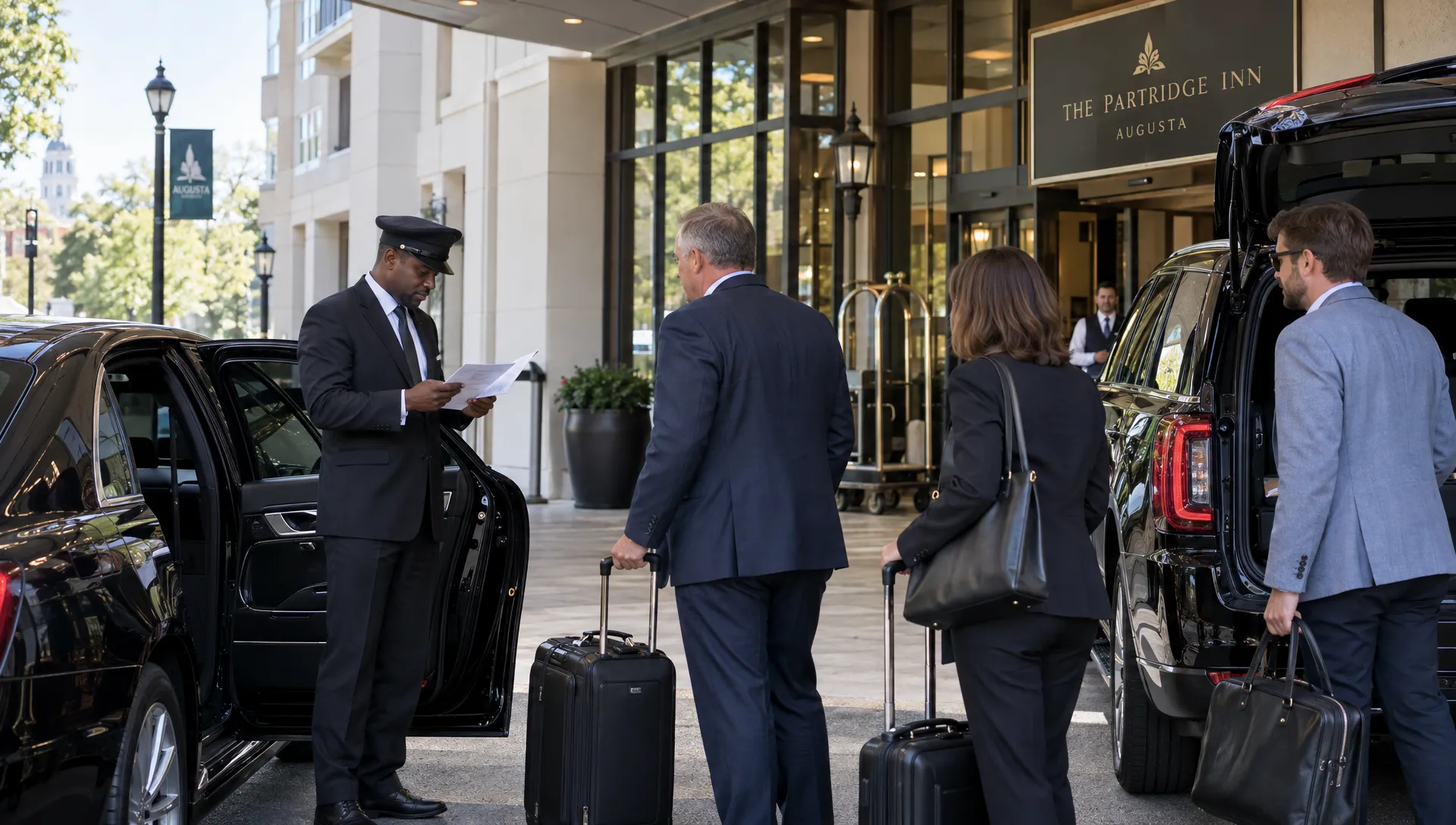
Choose one person to communicate with the chauffeur or dispatch team. For a wedding, that might be the planner or a designated attendant. For prom, it could be the booking parent. At a corporate event, an executive assistant or event coordinator can handle updates.
That contact should share confirmed passenger numbers, pickup instructions and any assistance needs with the transportation provider. Guests should send requests through that person rather than giving the chauffeur competing directions.
Be ready a few minutes before the scheduled departure, with coats, bags and essential belongings gathered. The pickup time is not the moment to begin finding missing accessories or assembling the group for photographs. If someone is delayed, tell the designated contact promptly so they can discuss options with dispatch.
Ask about food, beverages, decorations and vehicle rules before bringing anything onboard. Permission for one item does not imply permission for everything else. For organizing the reservation itself, Grand Limousine’s wedding and VIP rental planning guide covers the booking decisions that should be settled before event day.
Board gracefully and let the seating plan stay flexible
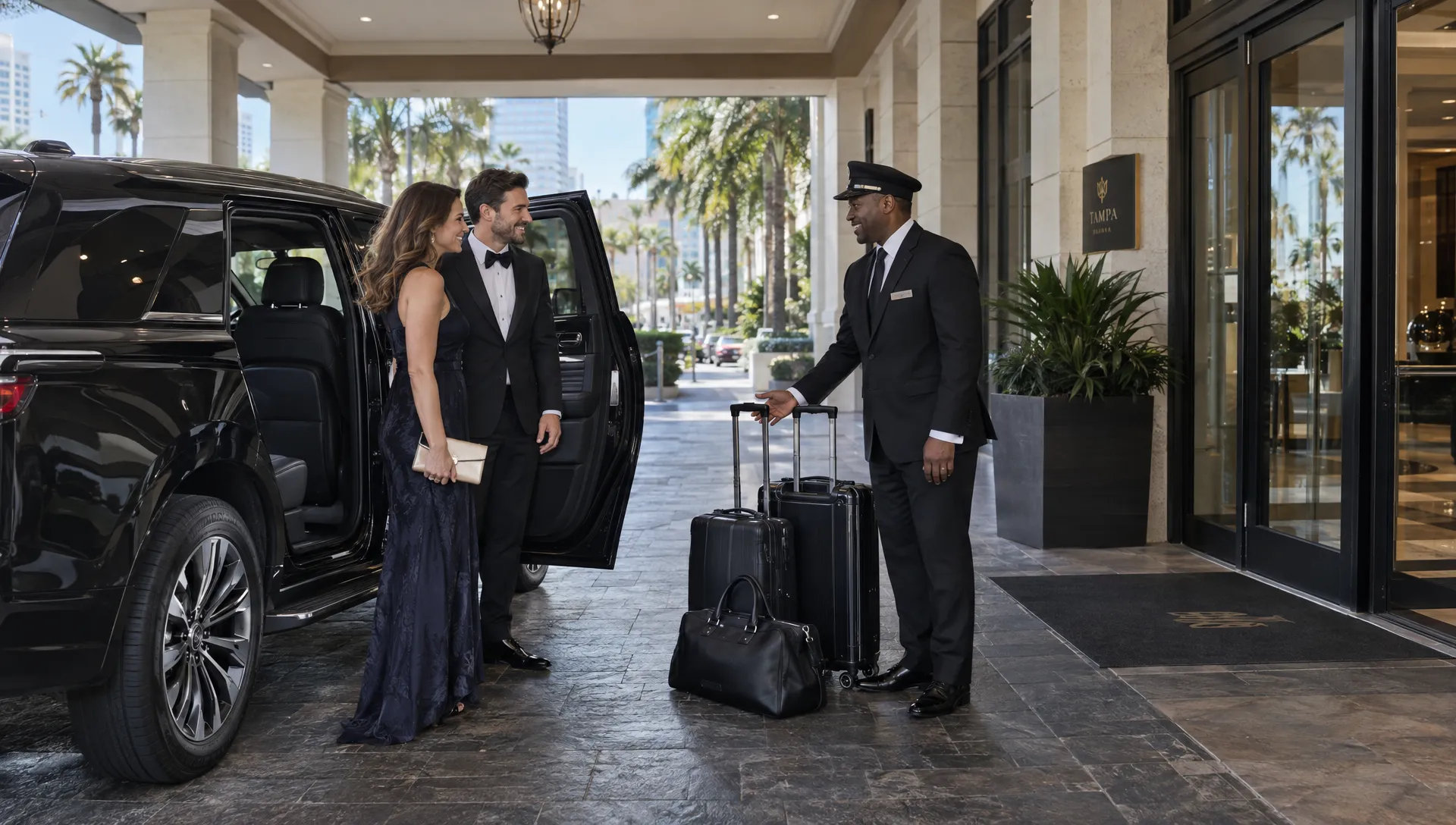
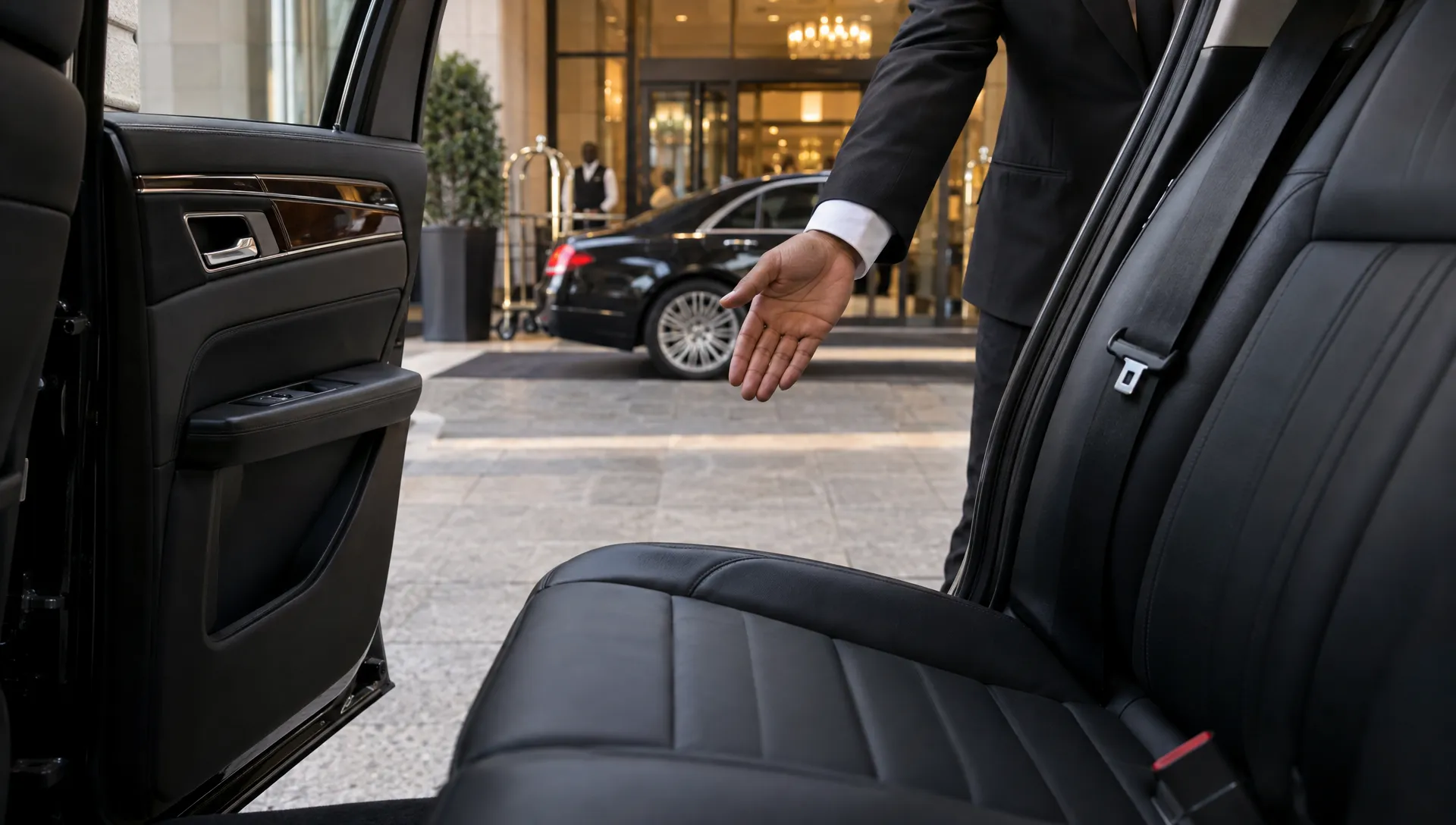
When entering a limo, wait until the vehicle has stopped safely and the chauffeur indicates it is time to board. Do not crowd the door while someone is getting out, and avoid stepping into traffic to reach the entrance.
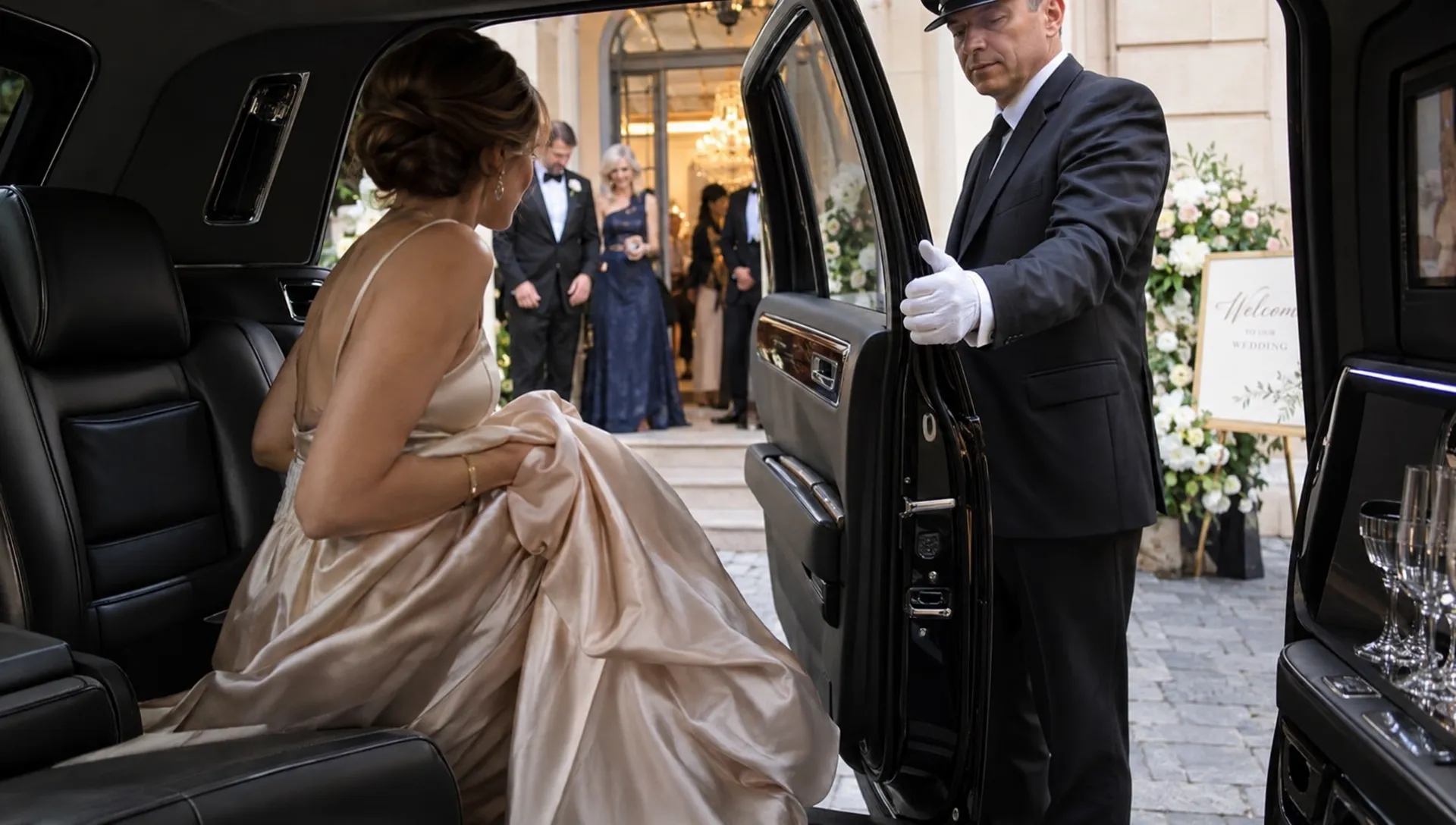
For a low doorway, sitting on the seat first and then bringing your legs inside can be easier than trying to walk into the cabin. Move slowly, protect your head and gather loose fabric so it does not catch in the door. Ask for assistance if you need it rather than attempting an awkward maneuver in formal shoes.
There is no universal rule that gives one passenger the “best” seat. Follow the host’s arrangement, account for mobility needs and avoid making someone climb past several people unnecessarily. An honored guest can be offered a preferred seat without turning boarding into a ceremony.
Ask before physically helping another passenger. Someone who uses a mobility aid may have a preferred way to transfer or may need a different vehicle arrangement altogether. Those requirements deserve confirmation before the trip, not improvisation at the curb.
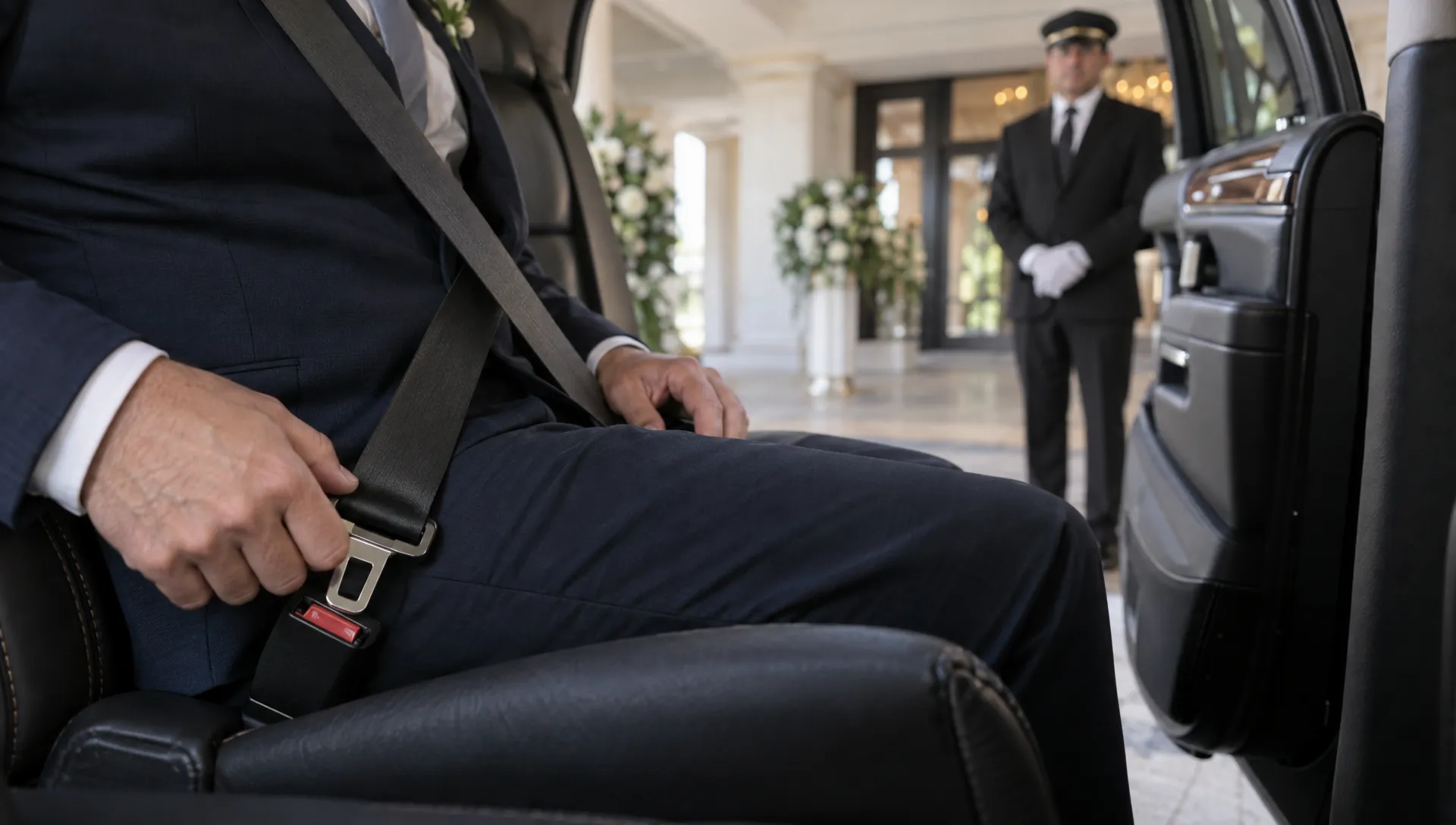
Once seated, buckle up. The National Highway Traffic Safety Administration’s seat belt guidance recommends wearing a seat belt on every trip. If you cannot locate or use yours, ask the chauffeur before departure.
Wedding manners: protect the couple’s time and space
Wedding limo etiquette is less about rigid seating traditions and more about supporting the couple’s plans. Ask whether they want a quiet ride together, company from attendants or a few minutes without cameras. Do not assume that being in the wedding party means being included in every transfer.
Keep large bouquets, garment bags and personal belongings out of doorways and away from other passengers’ feet. Arrange storage with the chauffeur rather than balancing loose items where they could fall during a turn. Drinks, makeup and food can damage formalwear or upholstery, so finish last-minute touch-ups before boarding whenever possible.
Photography should fit around the schedule. Ask before staging pictures beside the vehicle, and let the chauffeur choose a safe place to stop. Never climb onto the exterior or lean through a sunroof for a photograph.
If a reception runs late, guests should not independently tell the chauffeur to wait indefinitely. The designated contact should check availability and any additional charges with the provider. The same applies to an unplanned detour for food or an extra hotel stop.
Finally, respect the couple’s departure. If they have planned a private exit, avoid turning the doorway into a prolonged farewell line. Gather belongings beforehand so they can leave when intended.
Prom manners: agree on boundaries before the celebration
A prom limo is shared transportation, so everyone’s behavior affects the whole group. Parents and students should agree on the itinerary, passenger list and return arrangements before the evening begins. No passenger should invite an extra friend or request a different destination without approval from the booking adult and transportation provider.
Keep the expectations simple and explicit:
- Follow a no-alcohol and no-drugs rule for the group, and do not ask the chauffeur to overlook prohibited items.
- Stay seated and belted while the vehicle is moving, even during photographs or favorite songs.
- Keep music at a level that allows passengers to hear safety instructions.
- Do not pressure another student to drink, participate in a photo or accept an unwanted change of plans.
- Tell the designated adult promptly if someone feels unsafe, becomes ill or needs to leave early.
The chauffeur is responsible for driving, not replacing the group’s agreed adult supervision arrangements. Parents should know who will handle problems and how that person can be reached.
Students should keep phones charged and save the confirmed pickup instructions. For a crowded venue exit, use the meeting point supplied by the provider rather than wandering between vehicles. Grand Limousine’s prom transportation guide for parents provides additional planning considerations beyond passenger manners.
VIP events: practice discretion without making assumptions
For executive travel, award ceremonies and other VIP occasions, privacy is a courtesy as well as a logistical concern. Do not photograph fellow passengers, post their location or share their travel plans without permission. An invitation to ride together is not permission to publicize the experience.
Let the guest set the conversational tone. Some passengers want to talk; others need to prepare remarks, take a call or sit quietly. Avoid turning a shared journey into an unsolicited sales pitch or asking personal questions simply because you have someone’s attention.
Treat the cabin as a shared space, not a guaranteed confidential office. A partition does not establish soundproofing, and other passengers may overhear calls. Save sensitive discussions for an appropriate private setting.
For high-profile arrivals, follow instructions from the event coordinator, chauffeur and venue security. Do not announce a guest’s arrival online or direct the driver to stop in a restricted area for a better entrance photograph.
Professional courtesy also extends to the chauffeur. Use respectful language, communicate requests clearly and avoid interrupting during a difficult maneuver. If a route or access point needs discussion, raise it early or wait until the vehicle is safely stopped.
Respect the cabin and the people sharing it
Good limo manners include leaving the vehicle much as you found it. Keep shoes off the upholstery, place drinks in appropriate holders and use any provided trash container. Do not attach decorations, use confetti or open glitter-filled items without explicit approval.
Ask before eating, and check the provider’s beverage policy rather than assuming that glassware or a bar area authorizes outside alcohol. Applicable laws, passenger ages and company rules still matter. Smoking and vaping also require a policy check, not an assumption based on what another company allowed previously.
If something spills, tell the chauffeur as soon as it is safe to do so. Concealing a stain can make cleanup harder. Ask how to handle it rather than applying an unfamiliar cleaning product to the upholstery.
Keep shared controls considerate. Agree on music and temperature, and ask before adjusting unfamiliar equipment. A request for a quieter cabin should carry more weight than one passenger’s desire to keep the party loud.
Handle tipping, extra stops and problems discreetly
Before tipping for a limo ride, check the booking agreement. A service charge is not necessarily a gratuity, and a gratuity line does not always explain how the amount is distributed. Ask the provider what is included and whether any additional tip is optional.
In U.S. chauffeured transportation, a discretionary tip of around 15% to 20% of the base fare is a common convention when gratuity is not already included. It is a guideline, not a universal requirement. For a hosted event, the organizer should clarify who is handling it so guests do not feel put on the spot.
| Situation | Considerate response |
|---|---|
| Someone requests an extra stop | Have the booking contact ask about feasibility, timing and charges. |
| Guests disagree about splitting costs | Resolve the disagreement privately rather than involving the chauffeur. |
| A passenger leaves an item behind | Contact dispatch with the trip details and a description of the item. |
| The service does not match expectations | Explain the specific problem calmly and contact dispatch for help. |
Raise an immediate safety concern at once. Less urgent billing questions can be handled privately with the booking contact or company rather than debated at the venue entrance.
Frequently asked questions
Who should get into a limo first? Follow the chauffeur’s guidance and the host’s seating plan. The right order depends on the vehicle layout and passengers’ needs. Prioritize safe access over a rigid rule about age, gender or guest status.
Can passengers ask for an unplanned stop? They can ask, but the chauffeur may need approval from dispatch or the booking contact. Availability, legal stopping locations and the remaining schedule can affect whether the request is possible. Extra time or mileage may cost more.
Is it rude to talk to the chauffeur? No. A friendly greeting and clear requests are appropriate. Avoid demanding conversation, asking intrusive personal questions or distracting the chauffeur when traffic requires attention. Respect a brief response as a sign that driving comes first.
Should wedding or prom guests tip individually? Not necessarily. The host or booking adult may already have arranged gratuity. Check privately with that person before collecting money or offering an additional tip. Students should not be expected to resolve payment arrangements at the end of prom night.
Set expectations, then enjoy the occasion
The most useful etiquette decisions happen before departure: who communicates, where everyone meets and which rules apply onboard. Share those details with your group, then let the chauffeur focus on the road. For your next celebration or executive event, explore Grand Limousine’s transportation services and confirm any event-specific requests when booking.