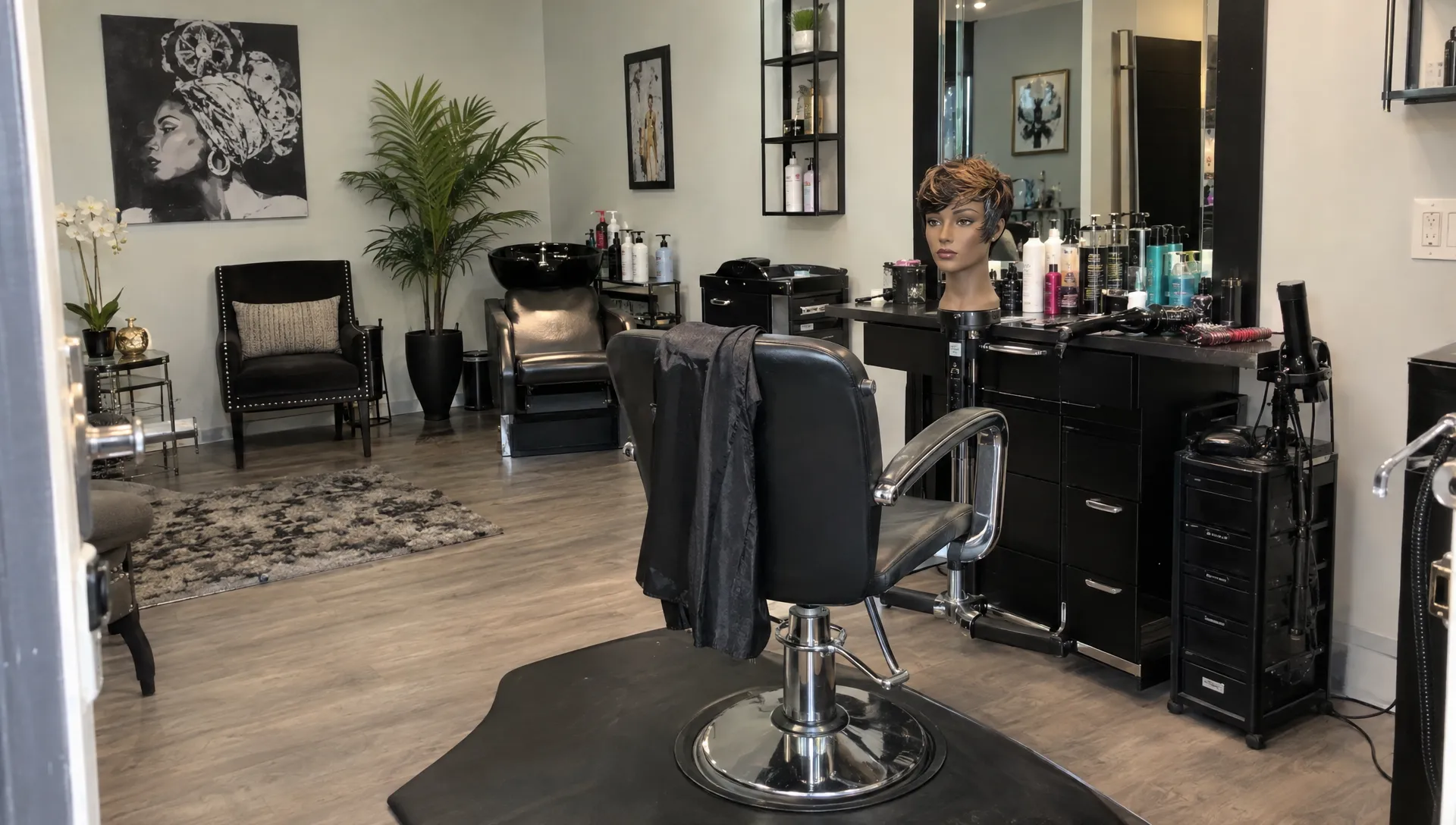
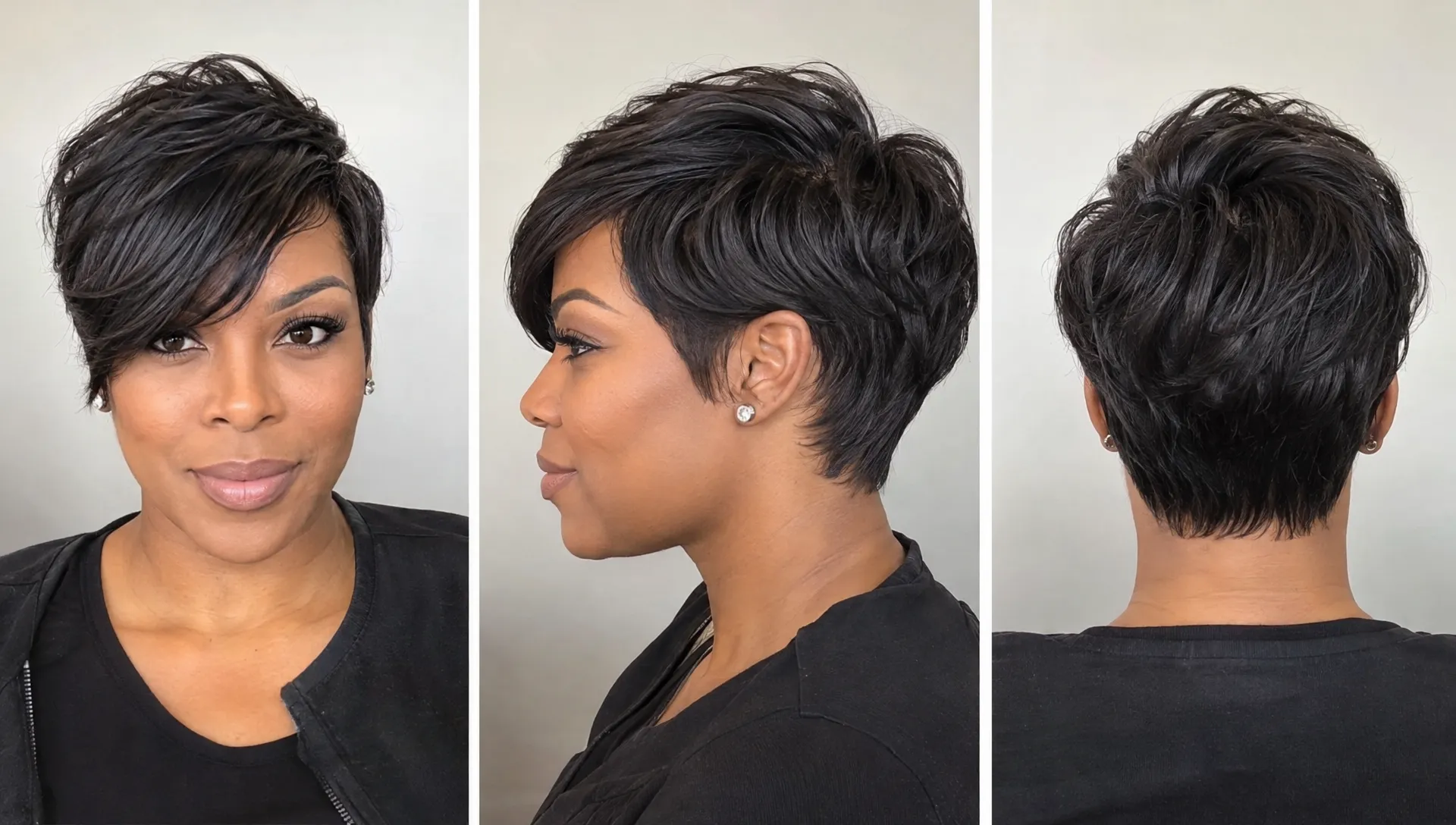
A 27 piece pixie cut can give you a close, sculpted hairstyle without cutting your own hair into a pixie. That makes it appealing if you want to try short hair, change your look for an event or keep your natural length underneath. But the finished style is only part of the decision.
Before booking, understand how the hair will be attached, whether your scalp can tolerate the installation and what maintenance and removal involve. A convincing short style needs more than a good reference photo: it needs a workable plan for the hair underneath.
What “27 piece” actually means
The name generally refers to a packaged assortment of short hair wefts used to create a cropped hairstyle. These kits typically contain different lengths, allowing a stylist to build a shorter neckline and sides with more length through the top. Packaging varies, so the name alone does not guarantee a particular number of individual pieces or a finished shape.
The hair usually needs additional cutting and blending after placement. Pre-cut pieces do not automatically produce a personalized haircut, especially around the ears, temples and crown.
A 27 piece pixie cut is commonly created as a quick weave, with extension wefts bonded over a prepared foundation. Depending on the approach, that foundation may include wrapped or braided natural hair, a cap and a protective barrier. Ask your stylist to explain the actual method rather than relying on the service name.
This is different from cutting your natural hair into a pixie. You are wearing an extension-based silhouette, although the preparation still needs to accommodate your natural hair’s length, density and condition.
Check your hair and scalp before choosing the look
A short weave is not automatically a protective style. Protection depends on the preparation, tension, adhesive placement, scalp access and removal, not simply on whether your ends are tucked away.
Tell your stylist about recent bleaching, relaxer services, breakage, thinning edges or previous reactions to hair glue. Active scalp irritation, open sores or unexplained hair loss are reasons to postpone an adhesive-based installation and seek appropriate medical advice.
The American Academy of Dermatology explains that hairstyles that pull can cause traction alopecia. Persistent pulling can eventually cause permanent hair loss. A style does not have to be long or visibly heavy to create damaging tension underneath.
A 27 piece pixie cut deserves extra caution if your hairline is already fragile. Ask how the foundation will avoid pulling at the temples and whether another method would be more suitable.
Pain, stinging and persistent tightness are not signs that an installation is secure. Speak up during the appointment rather than waiting for the foundation to loosen. If you have a known adhesive allergy, discuss that before any product is applied. A cap or barrier does not eliminate the possibility of irritation or an allergic reaction.
Choose a shape your stylist can realistically build
Reference photos help, but concentrate on the details that make the style appealing. Is it the flat, close-fitting crown? A longer side-swept fringe? Soft sideburns or a sharply tapered neckline? These choices matter more than matching a model’s face shape.
For a 27 piece pixie cut, the foundation also affects the final outline. Long or dense natural hair takes up space beneath the added hair, which can make an extremely close crop harder to achieve. Ask what profile is realistic without excessive compression or tension.
Bring front, side and back views when possible. If your inspiration collection feels inconsistent, organizing your pixie reference photos by shape and detail can help you explain what you actually want.
Discuss the extension hair before buying it, too. Human hair, synthetic hair and blends have different styling limits. Do not assume every kit can tolerate a flat iron, curling tool or color service. The manufacturer’s directions should determine heat compatibility, not the appearance of the fibers.
Color matching matters even when none of your natural hair will show. Consider how the shade looks against your complexion, brows and any exposed hairline. If you want natural hair left out for blending, ask how often it will need styling and whether that creates an unwanted heat commitment.
What to ask before a 27 piece pixie cut installation
The consultation should cover the hidden structure as carefully as the visible haircut. Your stylist should be able to explain how your hair will be prepared, where adhesive will go and how everything will come off.
Useful questions include:
- How will you isolate my natural hair from the bonding glue? Ask about the full foundation, not just whether a cap is included.
- Will any hair be left out? Clarify how the hairline and part will be finished and maintained.
- How will I clean my scalp? Get instructions that match the actual bonding system and materials.
- When and how should this installation be removed? Establish the removal plan before the first weft is attached.
- What should I do if it starts itching, lifting or pulling? Know when to contact the salon instead of attempting a repair.
For a bonded quick weave, hair-bonding glue should not be treated as an adhesive intended for exposed skin. A cap alone also does not prove that glue cannot reach the natural hair underneath.
Choose someone whose portfolio demonstrates close, blended short weaves as well as attractive front-facing photos. Our guide to choosing a salon for a pixie cut explains how to evaluate short-hair work and consultation quality.
Budget for the complete service, not just the hair pack
The price of a 27 piece pixie cut is not the same as the price of the packaged hair. A quote may include preparation, installation and detailed cutting, or those items may be charged separately.
There is no single reliable price that applies across salons, hair materials and installation methods. Request an itemized estimate based on your hair and chosen finish rather than budgeting from a social-media caption.
| Cost component | What to clarify before booking |
|---|---|
| Extension hair | Whether hair is included and which kit or fiber type is appropriate |
| Preparation | Whether cleansing, drying and foundation preparation are included |
| Installation and shaping | Whether the quote includes custom cutting, blending and finishing |
| Maintenance | Whether a refresh is recommended and what it involves |
| Removal | Whether takedown and post-removal cleansing are separate services |
Also ask how much appointment time to reserve. Preparing dense natural hair and refining a cropped silhouette may require more work than the small hair pack suggests. Avoid booking immediately before an event if there is no room to adjust an unfamiliar style.
Understand the upkeep before you leave the salon
Daily care for a 27 piece pixie cut should preserve the shape without sacrificing scalp comfort. Get a routine tailored to your installation rather than copying instructions for a different quick weave or wig.
At night, your stylist may recommend a satin scarf or bonnet, depending on whether the look is sleek or textured. Wrapping too tightly can flatten the crown or create pressure, so ask for a demonstration of the intended fit.
Keep styling products light and use only products compatible with the extension hair and bonding system. Repeatedly adding oil, heavy pomade or glue to disguise lifting can create buildup and make removal more difficult.
Scalp cleansing needs a clear plan. Ask whether and how the installed style can be washed, how to dry the foundation thoroughly and what to do after heavy sweating. If the method prevents you from keeping your scalp comfortable and clean, choose another approach rather than simply postponing cleansing.
Agree on a removal date based on the materials, your scalp and your routine. Do not extend wear just because the surface still looks neat. Persistent itching, tenderness, odor, sores or pulling call for prompt attention, not another layer of styling product.
Removal is part of the hairstyle
A 27 piece pixie cut should be chosen with takedown in mind, especially if preserving your natural length is the goal. Pulling off a cap or peeling away bonded wefts can take natural hair with them.
Ask which remover is appropriate for the adhesive used and whether professional removal is recommended. Do not substitute an improvised solvent or try to brush through remaining glue. Follow the product directions and stop if removal causes pain or resistance.
After takedown, the natural hair needs gentle detangling, cleansing and an assessment of the scalp and hairline. Conditioning may help manage the hair, but it cannot undo broken strands or treat ongoing scalp inflammation.
If that removal commitment does not suit you, discuss alternatives. A removable pixie wig can offer easier access to your natural hair, although fit, friction and any attachment method still matter. Cutting your own hair avoids an extension foundation but creates a different commitment: maintaining the haircut and eventually growing it out.
Frequently asked questions
Do I have to cut my natural hair first? Usually, no. The short silhouette comes from the added hair. Your natural length still affects the foundation’s bulk, so confirm what can be achieved without cutting or placing excessive tension on your hair.
How long does a 27 piece pixie cut last? Bonded quick weaves are generally short-term styles worn for a few weeks rather than months. Your specific removal schedule should reflect the adhesive, foundation, cleansing needs and scalp condition. Discomfort or irritation can mean it needs to come off sooner.
Can I wear this style with natural or relaxed hair? Either may be possible, but hair condition matters more than the label. Recently processed, breaking or fragile hair needs an individual assessment before installation.
Is this a good option for women over 50? Age does not determine suitability. Hairline strength, scalp health, preferred shape and maintenance needs are more useful considerations. A softer fringe or textured finish can be personalized without following rigid face-shape rules.
Talk through the look before committing
Kingdom Cute offers personalized consultations and hair extension services in Warner Robins, GA. Before purchasing a kit, contact Kingdom Cute about your desired short style and ask whether this specific technique is available and appropriate for your hair. Bring reference photos and discuss preparation, upkeep and removal alongside the finished look.