Keeping invisible bead extensions looking natural takes more than a careful installation. Your wash-day technique, drying habits and maintenance appointments all affect how comfortably the rows sit and how well your own hair holds up underneath. The goal is clean, dry attachment areas, manageable lengths and a maintenance schedule that suits your hair rather than someone else’s calendar.
This guide walks through the routine from shampooing to your next move-up, including the changes that deserve a call to your stylist before that appointment arrives.
Understand what you are maintaining
Invisible Bead Extensions, often called IBE®, is a specific branded installation method, not a general name for every concealed-bead sew-in. A beaded foundation supports sewn-in wefts, with the attachment points concealed by the installation technique. If your salon uses a different hidden-bead method, its aftercare instructions may differ.
There are two things to care for: your growing natural hair at the foundation and the extension lengths. The foundation needs gentle cleansing and thorough drying. The lengths need detangling, conditioning and protection from unnecessary heat and friction.
With invisible bead extensions, protecting the hair supporting each row matters just as much as keeping the added hair soft. Extra conditioner cannot correct excessive tension, an unstable attachment or an overdue maintenance visit.
Before leaving your installation appointment, ask your stylist to demonstrate brushing around the rows and explain which products suit your particular extension hair.
Your invisible bead extensions maintenance schedule
Use this as a planning guide, then adjust it to your installer’s written instructions.
| When | Main task | What to check |
|---|---|---|
| Daily | Gently detangle and arrange hair without pulling | Snags, discomfort or a change in how a row sits |
| Wash day | Cleanse the scalp, condition the lengths and dry the foundation | Residue, tangling near the attachment or persistent irritation |
| After exercise | Check and dry damp attachment areas | Sweat buildup and lingering moisture |
| Before bed | Detangle dry hair and secure it loosely | Pulling at the hairline or row ends |
| Scheduled maintenance | Have the stylist assess and service the installation | Regrowth, attachment stability and natural-hair condition |
Book your next appointment before leaving the salon. Many clients are scheduled around eight to ten weeks, but that is not a universal safe interval. Your stylist may recommend earlier maintenance based on your hair, installation and growth.
Wash day: clean the scalp without tangling the rows
Detangle before getting the hair wet
Start with dry hair and divide it into manageable sections. Hold the lengths above the section you are brushing, then work from the ends upward. Use an extension-safe brush your stylist recommends, stopping short of dragging bristles through the attachment itself.
Ask for a hands-on demonstration of how to brush the natural hair around each row. Leaving that area untouched can allow tangles to develop, but brushing through it aggressively can pull on the foundation.
For invisible bead extensions, washing already-tangled hair makes the job harder because water and movement can tighten existing knots. If you find a compact tangle close to the scalp, contact your stylist rather than pulling it apart.
Shampoo with your hair flowing downward
Wash upright in the shower when possible, keeping the lengths flowing downward rather than piling them on top of your head. Wet the hair thoroughly before applying shampoo.
Use your fingertips, not your nails, to clean the scalp gently between and around the rows. Move deliberately instead of scrubbing the whole installation in circles. Lift sections carefully so water can reach underneath without tugging on the attachment.
Choose a shampoo approved for your extension hair and scalp needs. A “sulfate-free” label alone does not tell you whether a product will cleanse adequately or leave buildup. If you use a prescribed scalp treatment, ask your clinician and stylist how to coordinate treatment with extension care.
Rinse until no slippery residue or foam remains around the foundation.
Condition the lengths, not the foundation
Apply conditioner mainly through the mid-lengths and ends, following the extension supplier’s directions. Keep heavy masks, oils and rich conditioning products away from the attachment area unless your installer specifically approves them there.
The added hair does not receive scalp oils in the same way as your growing hair, so the ends may need more conditioning than your roots. Start with a modest amount and distribute it evenly rather than saturating the entire installation.
Rinse while keeping the hair aligned. Afterward, gently squeeze out water and blot with a soft towel. Rubbing the lengths or twisting them into a tight towel wrap adds friction and can pull on the rows.
Dry the attachment area completely
For invisible bead extensions, a dry-looking surface does not necessarily mean the foundation underneath is dry. Dense hair can conceal moisture around the wefts and natural roots.
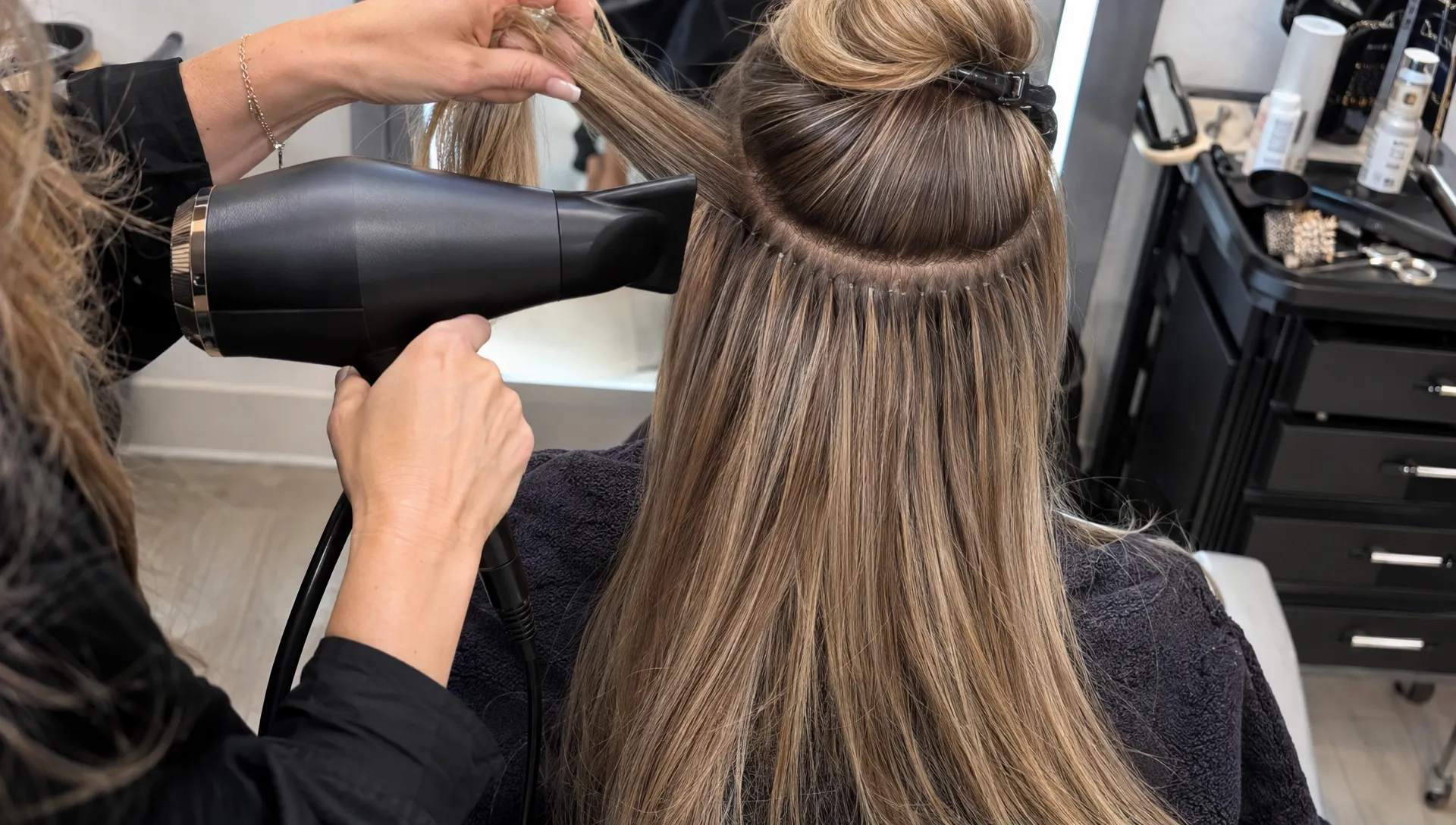
Separate the hair into sections and use controlled airflow to dry around each row. Lift the hair gently to reach underneath without directing concentrated heat against your scalp. Keep the dryer moving and follow your stylist’s temperature guidance.
Your natural texture, extension texture and installation density will affect how you finish the lengths. Avoid repeatedly stretching or overheating your own hair just to make it match the extensions. If blending requires excessive heat every wash day, discuss a different texture match or styling plan.
Before sleeping, check beneath each row with clean fingertips. The attachment area should feel dry, not cool and damp. Do not tuck wet hair into a bun, braid or bonnet and assume it will dry overnight.
Between washes: brushing, styling and nighttime care
Gentle daily detangling helps prevent loose shed hairs and friction from becoming a larger knot. Brush in sections, support the hair above where you are working and give the nape extra attention, especially after wearing scarves or high collars.
Your routine for invisible bead extensions should also include checking how styles feel at the attachment. A ponytail that looks good but pulls on the row ends is too tight. Choose lower-tension arrangements and change the placement instead of repeatedly stressing the same area.
Apply an appropriate heat protectant before hot-tool styling and use the lowest effective temperature within the extension supplier’s guidance. Keep irons away from beads, thread and attachment points. Repeated passes over the same ends can make extension hair rough and harder to detangle.
At bedtime, make sure the hair is dry, gently detangle it and secure it in a loose braid or another arrangement your stylist recommends. A satin or silk pillowcase or bonnet can reduce friction, but it cannot compensate for sleeping with damp, tangled hair.
Adjust your routine after workouts and swimming
Sweat does not always require a full shampoo, but it does require checking the foundation. After exercise, release tight styles and dry any damp attachment areas. Cleanse when your scalp needs it rather than repeatedly covering sweat and oil with dry shampoo.
Swimming with invisible bead extensions needs advance planning because water exposure and movement can increase tangling. Ask your installer whether swimming is suitable for your installation and extension hair.
If swimming is permitted, wet the lengths with fresh water first and secure them loosely in the recommended style. Do not rely on a tight bun to keep everything protected. Rinse promptly afterward, then cleanse and condition as directed for the water exposure.
Avoid leaving wet extensions bundled up during the drive home or for the rest of the afternoon. Allow enough time to dry the foundation thoroughly. If frequent swimming is part of your routine, discuss whether a different extension method would be easier to maintain.
Know when it is time for a move-up
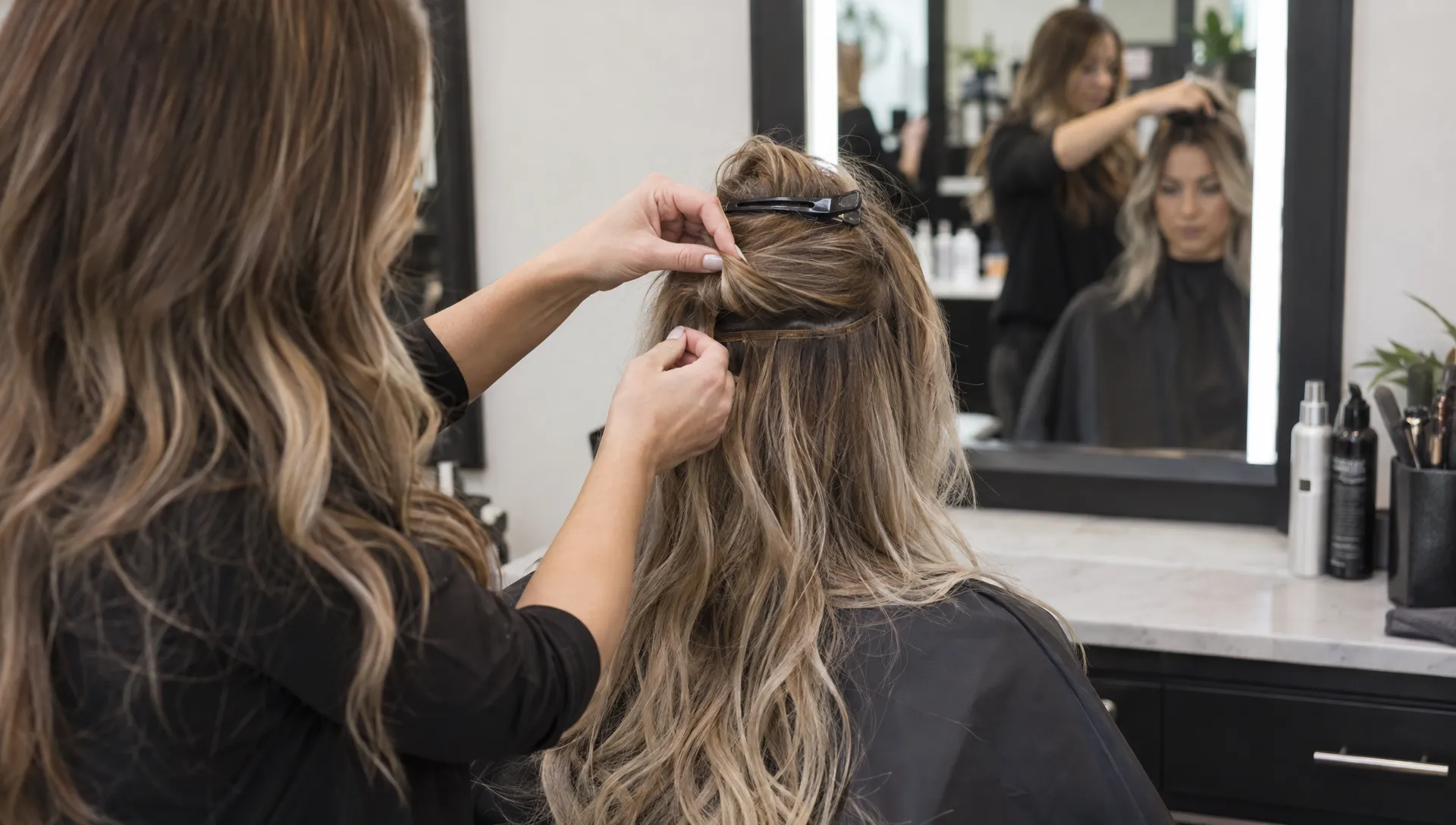
A move-up restores the installation’s position and gives the stylist an opportunity to assess the hair supporting it. It is not simply a cosmetic refresh.
As your natural hair grows, the foundation moves farther from the scalp. That changes how the installation moves and how easily the surrounding hair can tangle. Do not use another client’s long maintenance interval as proof that your own installation can wait.
The right move-up timing for invisible bead extensions depends on more than visible regrowth. Fine or fragile hair, attachment stability, shedding and your home-care routine all affect the decision.
Call before your scheduled appointment if a row starts twisting, one side drops noticeably or a bead feels loose. Do not clamp beads with household tools, cut stitching or try to slide the installation upward yourself.
If travel or scheduling will keep you away beyond the recommended interval, ask about an earlier visit or professional removal. Wearing the installation longer is not automatically the lower-maintenance choice.
What to discuss at the appointment
A maintenance service may involve removing and rebuilding the foundation rather than simply sliding beads upward. Ask what your specific method requires and what is included in the appointment.
Useful questions include:
- Natural-hair condition: Is there breakage, irritation or tangling around the foundation?
- Placement and weight: Would fewer rows, less length or a different position reduce pulling?
- Extension condition: Can the existing hair be reused, or are the ends becoming too worn?
- Home care: Are your products, brushing technique and drying routine working well?
Some naturally shed hairs may be released when an installation is removed. That does not mean every clump is harmless shedding. Ask your stylist to distinguish shed hair from breakage and explain any changes in density.
If you are changing providers, knowing how to choose a salon that does hair extensions well can help you ask about method-specific training, removal practices and ongoing maintenance.
Problems that should not wait until your next visit
Comfort is part of a successful installation. Pain, persistent pulling and inflamed skin are not signs that you simply need to get used to more hair.
The American Academy of Dermatology explains that repeated pulling from hairstyles can cause traction alopecia, a form of hair loss that can become permanent. That makes early attention to tension more important than preserving an installation.
With invisible bead extensions, contact your stylist promptly when something changes instead of trying to disguise it with a different style.
| What you notice | What to do |
|---|---|
| A loose bead, dropped row or uneven attachment | Stop pulling or restyling it and arrange a professional check |
| A knot forming close to the foundation | Avoid picking at it with a comb or sharp tool; request help |
| Persistent pain, bumps or redness | Contact the stylist promptly and seek medical advice for ongoing scalp symptoms |
| New thinning or broken hairs around attachment points | Have the installation assessed and consult a dermatologist |
| Sores, drainage or worsening inflammation | Seek medical care rather than treating it only as an aftercare issue |
Dry shampoo, scalp oil and a tighter ponytail do not fix a mechanical problem. If the installation needs adjustment or removal, products cannot substitute for that service.
Frequently asked questions
How long do invisible bead extensions last? Separate the maintenance interval from the lifespan of the extension hair. The installation needs scheduled servicing as your natural hair grows, often around eight to ten weeks but sometimes sooner. Suitable extension hair may be reused across multiple appointments, depending on its quality, condition and supplier’s guidance. Reusability does not make it safe to delay a move-up.
Are they suitable for fine hair? Sometimes, but fine hair needs an individual assessment of density, strength, scalp condition and the amount of weight proposed. Concealed attachments do not guarantee a low-tension installation. If you have active thinning, significant breakage or scalp inflammation, seek appropriate evaluation before adding extensions. Comparing extension methods against your lifestyle and hair health can help you prepare for that discussion.
How much should I budget for maintenance? Request a written breakdown rather than relying on a general price online. Ask about installation, extension hair, move-ups, removal, blending and eventual hair replacement. Confirm whether washing and styling are included in maintenance appointments and whether pricing changes with the number of rows. Kingdom Cute’s pricing for this specific method is not provided here, so confirm availability and costs directly.
Plan your care before your next appointment
The most manageable routine for invisible bead extensions is one you can realistically follow: gentle cleansing, complete drying, low-tension styling and appointments booked on time.
Kingdom Cute offers personalized consultations and hair extension services in Warner Robins, GA. Bring your current product list, wash schedule and styling preferences to the consultation. Ask whether the specific method you want is available and appropriate for your hair, then leave with clear aftercare instructions and a scheduled maintenance date.

No comments:
Post a Comment