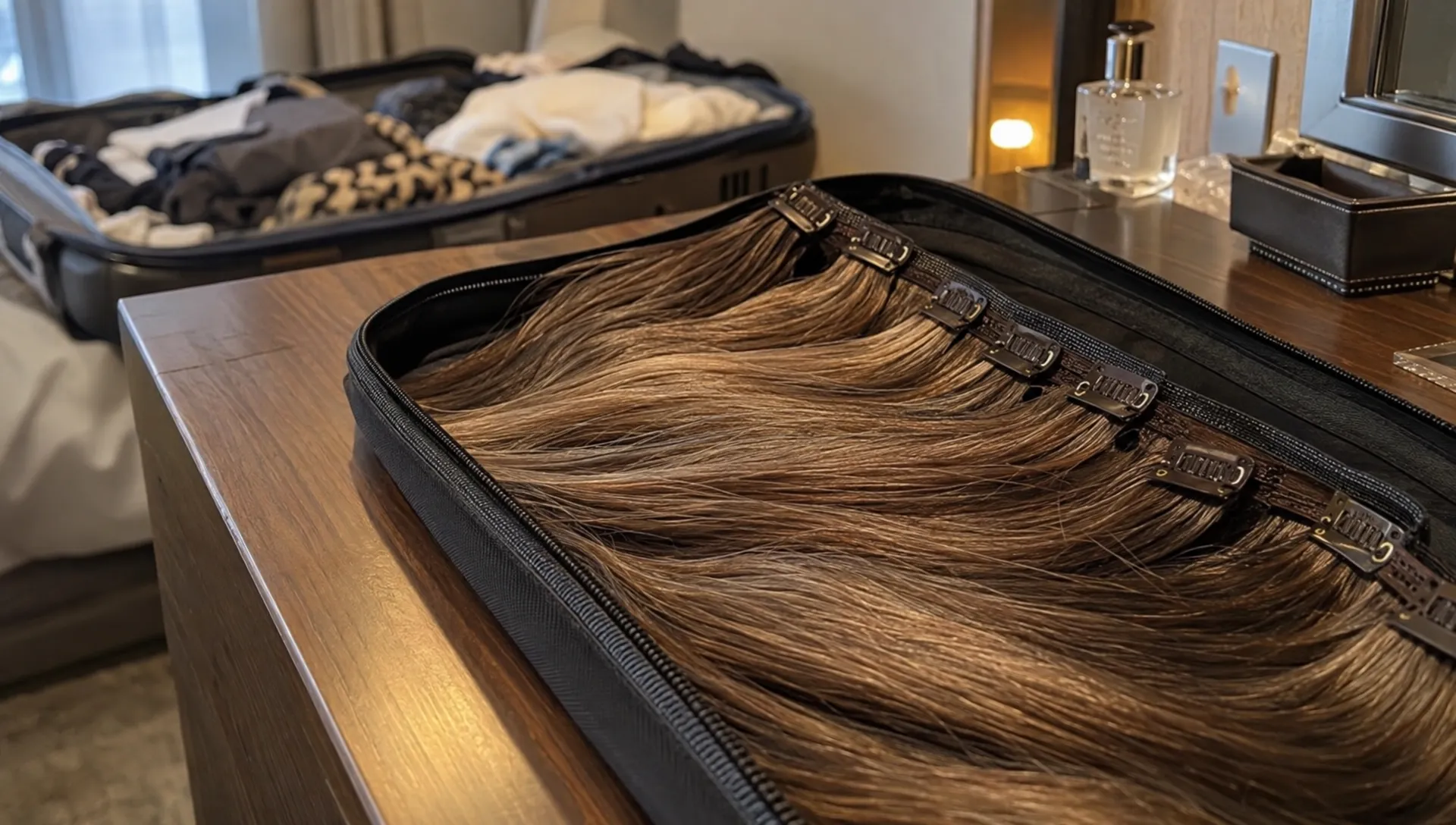
Packing human hair extensions well starts with three things: clean, completely dry hair, secure storage and enough space to prevent crushing. Removable pieces should travel in a protective case with the lengths gently arranged, while installed extensions need a low-tension style and a small care kit. Whether you are heading out for a weekend or flying to a destination wedding, a little preparation can prevent tangles, flattened styles and a rushed detangling session at your hotel.
Prepare your extensions before packing
Check their condition and attachment points
Inspect removable pieces for tangled ends, loose stitching or damaged clips before they go into your luggage. Close clips after checking them so their teeth are less likely to catch neighboring wefts.
If your extensions are installed, check for slipping attachments, uncomfortable tension or matting near the roots. Have your stylist assess problems before departure rather than trying to repair them during your trip. Do not remove tape-ins, bonded extensions or sewn-in wefts yourself just to make travel easier.
Clean only when needed, then dry completely
You do not need to wash freshly cleaned extensions again simply because you are traveling. If they have product buildup, wash them according to the supplier’s instructions and leave enough time for the entire piece to dry, including thick weft seams.
For installed tape-ins, follow your stylist’s attachment-care instructions. Our guide to washing tape-in extensions without loosening bonds explains why product placement and careful drying matter.
Before packing human hair extensions, gently detangle them using a tool suitable for their texture. Work upward from the ends while supporting the hair above each tangle. For curly textures, follow the supplier’s detangling method rather than brushing dry curls indiscriminately.
How to pack human hair extensions for travel
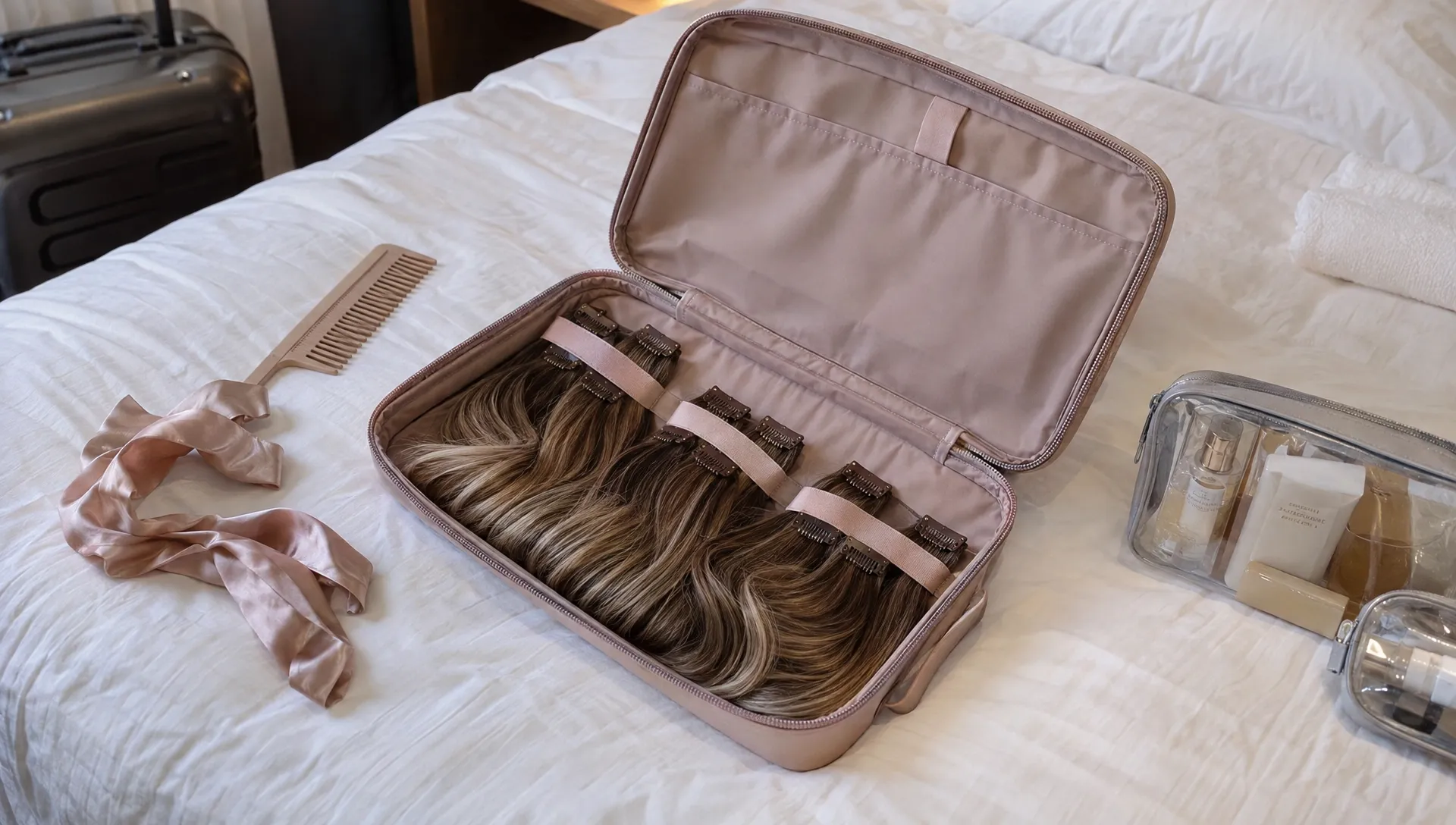
A purpose-made extension carrier is useful, but you can also use a clean, smooth-lined pouch inside a structured case. The goal is to limit friction and movement without compressing the hair.
- Separate the pieces: Arrange clip-in wefts by size or wearing order so you can find the right piece without pulling apart the whole set.
- Secure the attachment area: Close clips and keep them away from loose lengths. For an unworn tape-in set, retain the original protective backing and packaging as directed by the supplier.
- Arrange the lengths gently: Lay the hair straight when space allows or curve it into a broad U shape. Avoid tight folds, sharp bends and small coils that can leave creases or encourage tangles.
- Contain the hair without squeezing it: Place the pieces in separate smooth sleeves or use a loose satin tie around the lengths. Do not stretch an elastic tightly around the hair or attachment points.
- Protect the carrier: Put it in a structured compartment or case, away from shoe soles, zippers and leaking toiletries. Avoid packing heavy items directly on top.
For curled human hair extensions, preserve the existing shape with roomy storage rather than flattening the curls to save space. Textured pieces may need more room than straight ones.
A hanger-style carrier can work for longer sets, but the hair still needs protection when the carrier is folded into luggage. Follow its design rather than forcing it into a smaller compartment.
Adjust your plan to the extension method
Removable and installed extensions face different travel problems. Loose pieces need protection from crushing and snagging; attached pieces need protection from friction, tension and incomplete drying.
| Extension type | Travel approach | Main precaution |
|---|---|---|
| Clip-ins | Pack closed clips and separated wefts in a protective carrier | Keep clip teeth from catching loose hair |
| Halo extensions | Support the hair and store the wire according to the maker’s instructions | Avoid sharply bending or tangling the wire |
| Uninstalled tape-ins | Keep clean, dry pieces in their original protective packaging where possible | Do not expose adhesive or contaminate attachment areas |
| Installed tape-ins, bonded extensions or wefts | Wear a comfortable, low-tension style and bring approved care products | Avoid pulling on attachments or leaving roots damp |
If you are wearing human hair extensions during a long flight or drive, choose a loose braid or another stylist-approved style that keeps the lengths contained. Position it so you are not resting an uncomfortable knot or bulky attachment area against the seat.
A smooth scarf can reduce rubbing against a headrest, provided it is not tied tightly. For bead-based wefts, our maintenance guide from wash day to move-up offers additional care guidance to review before departure.
Build a small, useful travel care kit
Bring products you already know work with your extension system. A trip is a poor time to experiment with a new oil, bond treatment or heavily fragranced styling spray.
Your kit can stay compact:
- Texture-appropriate detangling tool: Choose one that will not snag attachment points.
- Approved shampoo and conditioner: Transfer them into labeled, leak-resistant travel containers if needed.
- Leave-in product or detangler: Bring it only if recommended for your hair, keeping it away from attachment areas where required.
- Heat protectant: Include it if you plan to use heat styling and the extension supplier permits it.
- Soft ties and a satin scarf or bonnet: Use these for loose containment and overnight protection.
- A smooth storage pouch: Keep removable pieces protected when you take them off at your destination.
Keep liquids in a separate leak-resistant bag rather than beside your hair carrier. For flights departing from U.S. airports, the TSA liquids rule generally limits carry-on liquids, gels and aerosols to containers of 3.4 ounces or 100 milliliters, fitting inside one quart-sized bag per passenger.
When traveling with human hair extensions, keeping removable pieces in your carry-on can also reduce the inconvenience of delayed checked luggage. They still need a protective case; an overfilled personal bag can crush them too.
If you pack a styling tool for international travel, check its voltage rating and the destination’s electrical supply. A plug adapter alone does not convert voltage. Battery-powered and butane tools may have separate airline restrictions.
Protect your extensions at the destination
Unpack before the suitcase becomes storage
Remove your extension carrier from tightly packed luggage when you arrive. Store the pieces in a clean, dry place away from shower steam, direct heat and the edge of a sink. If you hang them, use a carrier designed to support the attachment area rather than improvising with clips that could damage the hair.
For removable pieces, take them out before sleeping unless the product instructions specifically allow otherwise. Installed extensions need a different routine: gently detangle as directed and loosely contain the lengths with an appropriate braid, scarf or bonnet.
Plan for humidity, pools and beach days
Humidity can change the finish of human hair extensions, especially when their natural texture differs from your own. Carry a suitable detangler and choose a style that can tolerate some texture change instead of repeatedly applying high heat.
For removable sets, taking them out before swimming is the simplest way to avoid salt, chlorine and water-related tangling. If your extensions are installed, ask your stylist whether swimming is appropriate for your attachment system before the trip.
When swimming is permitted, follow your stylist’s preparation instructions, rinse promptly afterward and dry the roots and attachment areas thoroughly. A swim cap is not a guarantee that the hair will remain dry. Never put wet removable pieces straight into a closed storage bag.
Handle tangles without damaging the attachments
Travel tangles often start where hair rubs repeatedly against a collar, scarf, seat or bag strap. Check those areas before a small knot becomes a dense tangle.
For removable pieces, take them out and place them on a clean surface. Support the weft, separate manageable sections and work carefully from the ends upward. Use a compatible detangling product only where the supplier allows it.
For installed pieces, support the hair above the tangle so brushing does not transfer force to your scalp or attachment points. Do not pull a comb straight through a knot near a bond, bead or tape tab.
If human hair extensions develop tight matting around the roots or attachments, stop trying to brush through it and contact a qualified extension stylist. Cutting into a mat or using an improvised adhesive remover can damage your natural hair as well as the extensions.
If pieces become damp in transit, unpack them as soon as possible and dry them using the supplier’s recommended method. Do not seal them away again until the lengths and seams are completely dry.
Frequently asked questions
Can I pack extensions in a regular plastic bag? A clean plastic bag can provide short-term separation for completely dry pieces, but it offers little protection from crushing and can trap moisture. Use a smooth sleeve inside a structured case when possible. Never seal damp hair inside it.
Should I wash my extensions before every trip? No. Wash when needed based on buildup, wear and the supplier’s care instructions. Allow enough drying time before departure, especially around thick seams and installed attachment areas.
Can I use hotel shampoo on human hair extensions? Check the extension supplier’s recommendations rather than assuming an unfamiliar shampoo is suitable. Bringing a small amount of your usual approved product makes care more predictable, particularly with adhesive-based systems.
Should I straighten extensions before packing them? Not necessarily. Preserve the texture or style you intend to wear. Extra heat adds another styling step without replacing the need for careful storage. If heat is permitted, follow the supplier’s temperature guidance and use compatible heat protection.
Get a travel-ready care plan before you leave
Before a longer trip, ask your stylist to review your attachment condition, drying routine and destination plans. Mention swimming, humid weather or limited access to styling tools so the advice fits your itinerary.
At Kingdom Cute in Warner Robins, GA, personalized consultations can help you discuss extension options and maintenance needs. Book an appointment with Kingdom Cute before departure to plan a manageable routine and address concerns before they become travel problems.

No comments:
Post a Comment